
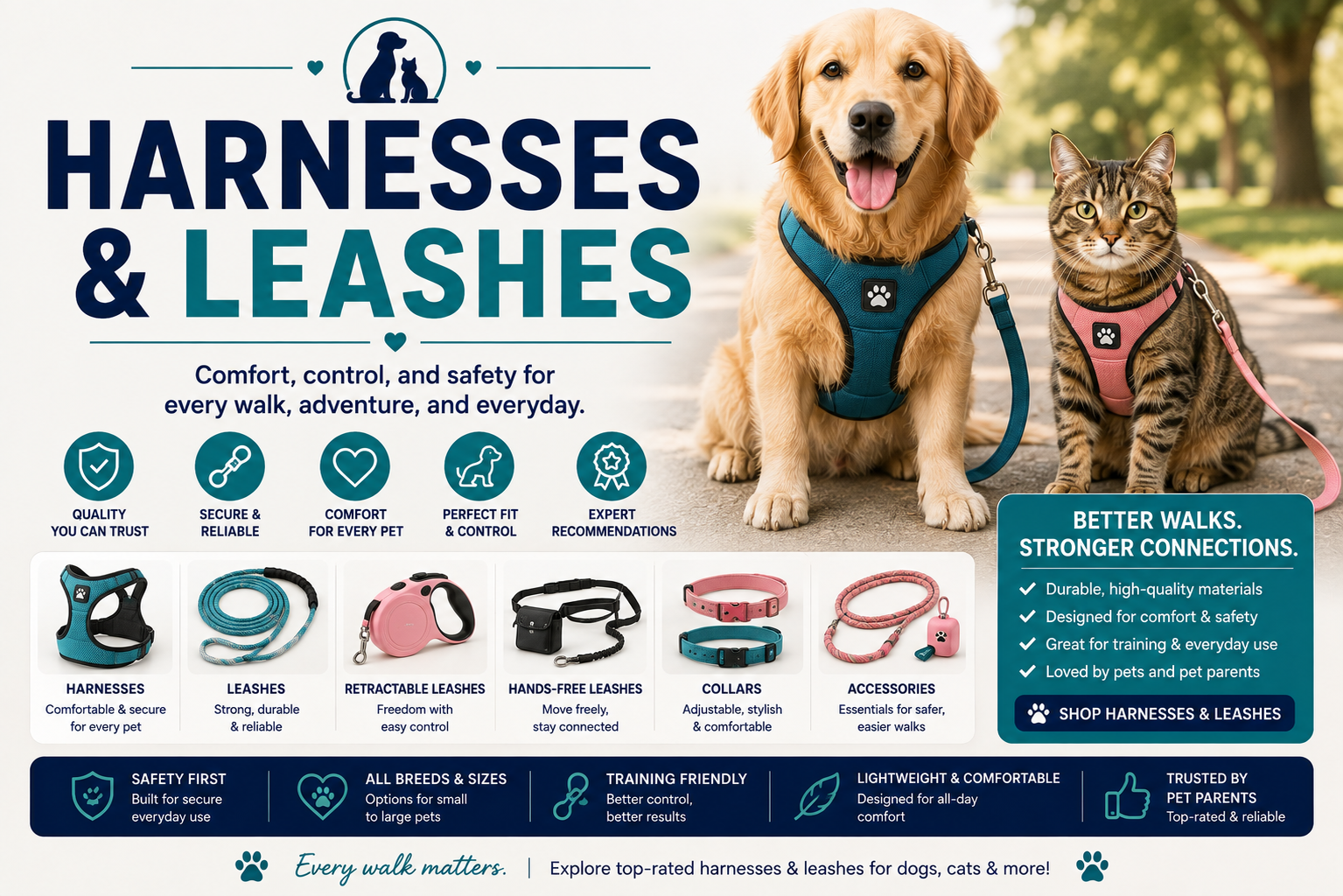
Cat Harnesses & Leashes
Cat walking gear must balance escape resistance with comfortable movement. Fit, gradual conditioning and close supervision matter more than decorative styling, because cats can reverse out of loose harnesses or freeze when introduced too quickly.
Quick Answer
Cat walking gear must balance escape resistance with comfortable movement. Fit, gradual conditioning and close supervision matter more than decorative styling, because cats can reverse out of loose harnesses or freeze when introduced too quickly.
Explore Current Cat Harnesses & Leashes Options
Browse current products, then use the fit, construction, safety and maintenance criteria below to narrow the selection.
Open the approved product search in a new tab.
View Available OptionsMatch the Design to the Need
Different formats solve different problems. Start with the use case before comparing features.
Vest harnesses
Best for: Broader body contact and pressure distribution. Prioritize secure closures and breathable material.
H-style harnesses
Best for: Lightweight everyday training. Prioritize multiple adjustment points.
Jacket harnesses
Best for: Cats that slip narrow straps. Prioritize snug torso coverage without restricting shoulders.
Short training leashes
Best for: Early controlled practice. Prioritize light weight and secure hardware.
What Matters Most
- Measure the neck and chest using the maker’s chart.
- Check fit every session before attaching the leash.
- Condition the harness indoors before outdoor use.
- Avoid retractable leashes during early training.
- Keep identification and microchip details current.
Quick Comparison Framework
Use this table to narrow the product type before comparing individual models.
| Type | Best use | Priority feature | Before buying |
|---|---|---|---|
| Vest harnesses | Broader body contact and pressure distribution | Secure closures and breathable material | Confirm fit, stability and maintenance before use |
| H-style harnesses | Lightweight everyday training | Multiple adjustment points | Confirm fit, stability and maintenance before use |
| Jacket harnesses | Cats that slip narrow straps | Snug torso coverage without restricting shoulders | Confirm fit, stability and maintenance before use |
| Short training leashes | Early controlled practice | Light weight and secure hardware | Confirm fit, stability and maintenance before use |
How to Choose Cat Harnesses & Leashes
A repeatable selection process helps prevent sizing, compatibility and maintenance mistakes.
1. Define the use case
Decide whether the priority is everyday use, travel, training, enrichment or mobility support before comparing cat harnesses & leashes.
2. Measure carefully
Use the manufacturer’s sizing method and compare real dimensions, not only broad labels such as small, medium or large.
3. Inspect construction
Check seams, closures, fasteners, edges and load-bearing points for the way the product will actually be used.
4. Plan the introduction
Allow the pet to investigate new equipment gradually and pair calm interaction with rewards.
5. Maintain the product
Clean food-contact or frequently handled surfaces as directed and let parts dry fully before reuse.
6. Recheck over time
Growth, weight change, wear and changing mobility can make a once-suitable product unsafe or uncomfortable.
Common Buying and Use Mistakes
Do not choose by appearance or broad size label alone. Confirm measurements, intended use, closure strength and cleaning requirements.
Introduce unfamiliar equipment gradually. Rushing the process can create avoidance and make it harder to judge whether the product actually fits.
Inspect the product regularly and stop using it when webbing, fasteners, seams, surfaces or structural parts become damaged.
Cat Harnesses & Leashes FAQs
How tight should a cat harness be?
It should be snug enough that the cat cannot back out, but not so tight that it restricts breathing or shoulder movement. Follow the manufacturer’s fitting method and recheck after the cat moves around.
Can any cat learn to walk on a leash?
Many cats can learn, but comfort levels vary. Progress should be gradual, and some cats may prefer secure patios, carriers or strollers instead of ground-level walks.
What is the safest harness style for an escape-prone cat?
A well-fitted vest or jacket-style harness may provide more torso coverage, but no harness is completely escape-proof. Supervision and careful fit checks remain essential.
How long does harness training take?
Some cats adjust within days, while others need several weeks. Use short indoor sessions with rewards and stop before the cat becomes distressed.
Should I attach a leash to a cat collar?
No. A walking leash should attach to a properly fitted harness so force is distributed across the body rather than concentrated on the neck.
Are retractable leashes good for cats?
They can add sudden tension and allow too much distance in unfamiliar settings. A lightweight fixed-length leash offers more predictable control during training.
Can kittens wear harnesses?
Yes, when the harness fits correctly and sessions are supervised. Recheck sizing frequently because kittens grow quickly.
What should I do if my cat freezes in the harness?
Reduce the session length and return to easier steps, such as placing the harness nearby or wearing it briefly indoors. Do not pull the cat forward with the leash.
Choose Cat Harnesses & Leashes for the Real Use Case
Start with fit and safety, then compare convenience, durability and maintenance.
See Current Selection