
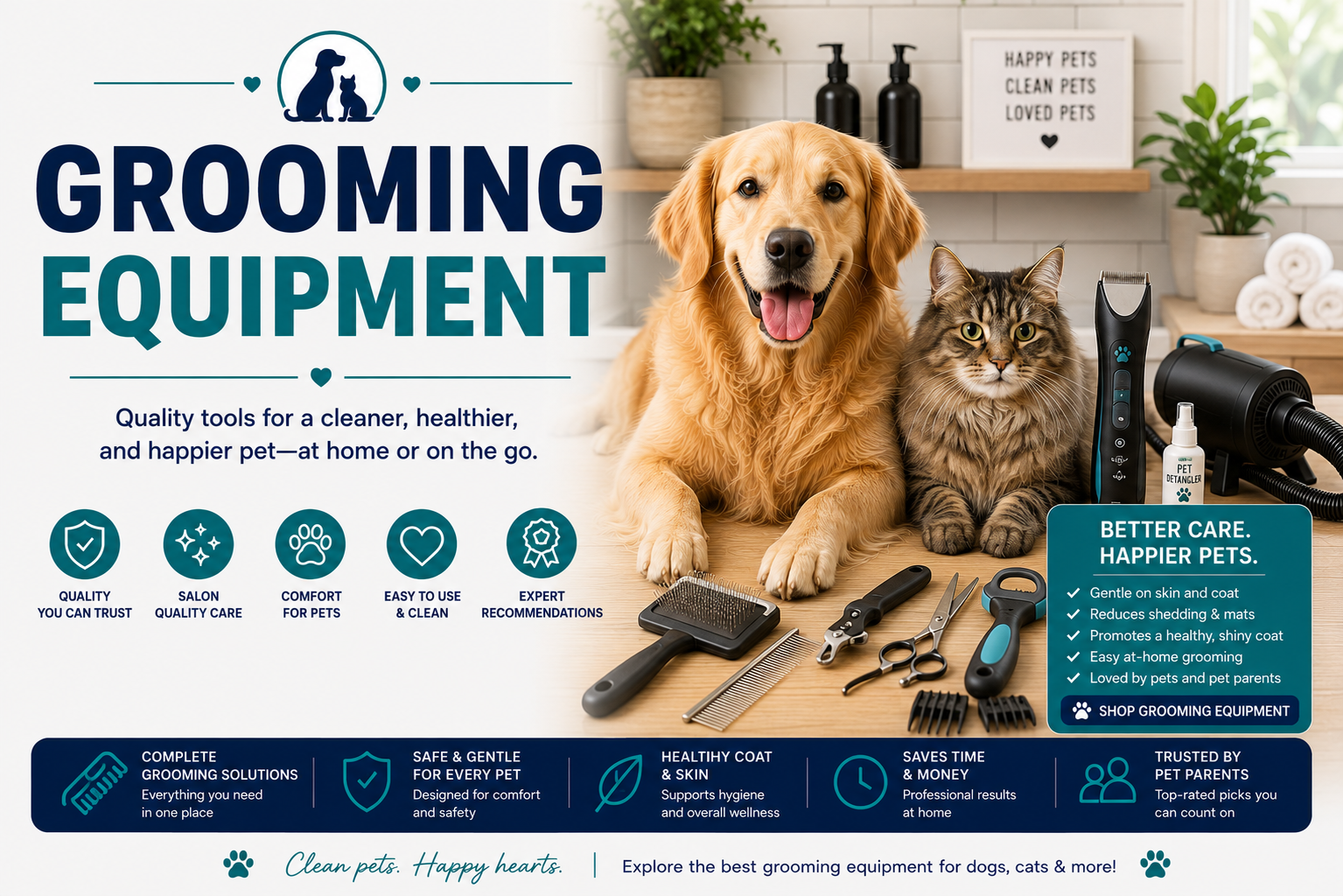
Best Pet Grooming Dryers
Compare best pet grooming dryers by comfort, safety, durability, ease of use and value to find the right option for your pet and lifestyle.
Quick Answer
A pet grooming dryer should provide controllable airflow, manageable noise, and safe temperature behavior. High-velocity airflow can remove water and loose undercoat efficiently, but it should never be aimed into the eyes or ears, used on maximum force immediately, or held close enough to overheat skin.
Browse Best Pet Grooming Dryers
Review the current selection, then use the fit, safety, maintenance, and compatibility guidance below to narrow the choices.
Open the approved product search in a new tab.
View Available OptionsTypes and Use Cases
Start with the format that fits the pet, handler, environment, and daily routine.
High-velocity dryer
Water removal and undercoat blowout
Variable airflow and insulated hoseStand dryer
Hands-free brushing and finishing
Stable stand and directed nozzleCage dryer
Professional controlled setups only
Temperature safeguards and monitoringCompact home dryer
Small pets and occasional grooming
Low noise and easy filter accessWhat Matters Most
- Airflow control: Begin low and increase only while the pet remains comfortable.
- Temperature: Avoid excessive heat and monitor hose and air temperature.
- Noise: Introduce the dryer gradually at a distance.
- Filter care: Hair buildup can restrict airflow and raise operating temperature.
- Cord and hose safety: Inspect damage and keep equipment away from water.
Format Comparison
| Type | Best use | Feature to prioritize | Final check |
|---|---|---|---|
| High-velocity dryer | Water removal and undercoat blowout | Variable airflow and insulated hose | Confirm fit, setup, and safe use for the individual pet. |
| Stand dryer | Hands-free brushing and finishing | Stable stand and directed nozzle | Confirm fit, setup, and safe use for the individual pet. |
| Cage dryer | Professional controlled setups only | Temperature safeguards and monitoring | Confirm fit, setup, and safe use for the individual pet. |
| Compact home dryer | Small pets and occasional grooming | Low noise and easy filter access | Confirm fit, setup, and safe use for the individual pet. |
How to Choose More Confidently
1. Airflow control
Begin low and increase only while the pet remains comfortable.
2. Temperature
Avoid excessive heat and monitor hose and air temperature.
3. Noise
Introduce the dryer gradually at a distance.
4. Filter care
Hair buildup can restrict airflow and raise operating temperature.
5. Cord and hose safety
Inspect damage and keep equipment away from water.
Common Buying Mistakes
Using the hottest setting close to the skin for a prolonged period.
Directing high-pressure air at the face, ears, or sensitive areas.
Operating with blocked filters, cracked hoses, or damaged cords.
Best Pet Grooming Dryers FAQs
How do I choose the right size or format for best pet grooming dryers?
Use the manufacturer’s measuring method and compare it with the individual pet’s dimensions, coat, behavior, environment, and intended use. Do not rely only on breed or weight labels.
Which feature should I prioritize first?
Begin low and increase only while the pet remains comfortable. Then confirm the remaining safety, maintenance, compatibility, and supervision requirements.
How should the product be introduced?
Introduce it gradually in a calm setting. Reward investigation and short successful use before adding duration, movement, noise, or a more difficult environment.
Can it be used without supervision?
That depends on the product and the individual pet. New grooming tools, powered devices, electronic containment, water gear, and anything with removable or moving parts should be tested under close supervision.
How often should it be inspected?
Inspect before each important use and after chewing, impact, water exposure, escape attempts, or heavy wear. Check hardware, stitching, cords, seals, surfaces, and moving parts.
When should it be replaced?
Replace it after cracks, fraying, failed fasteners, exposed wiring, bent hardware, sharp edges, persistent odor, leaking, or any structural change that makes normal use unsafe.
Does a higher price guarantee better performance?
No. Appropriate fit, transparent specifications, safe construction, cleaning access, support, and suitability for the individual pet matter more than price alone.
What should I verify after the first few uses?
Recheck fit, stability, contact points, noise, heat, movement, connection reliability, and the pet’s behavior. Early rubbing, avoidance, loosening, or inconsistent operation can reveal a poor match.
Choose for the Pet and the Routine
Prioritize fit, safety, maintenance, and practical daily use.
See Current Selection