
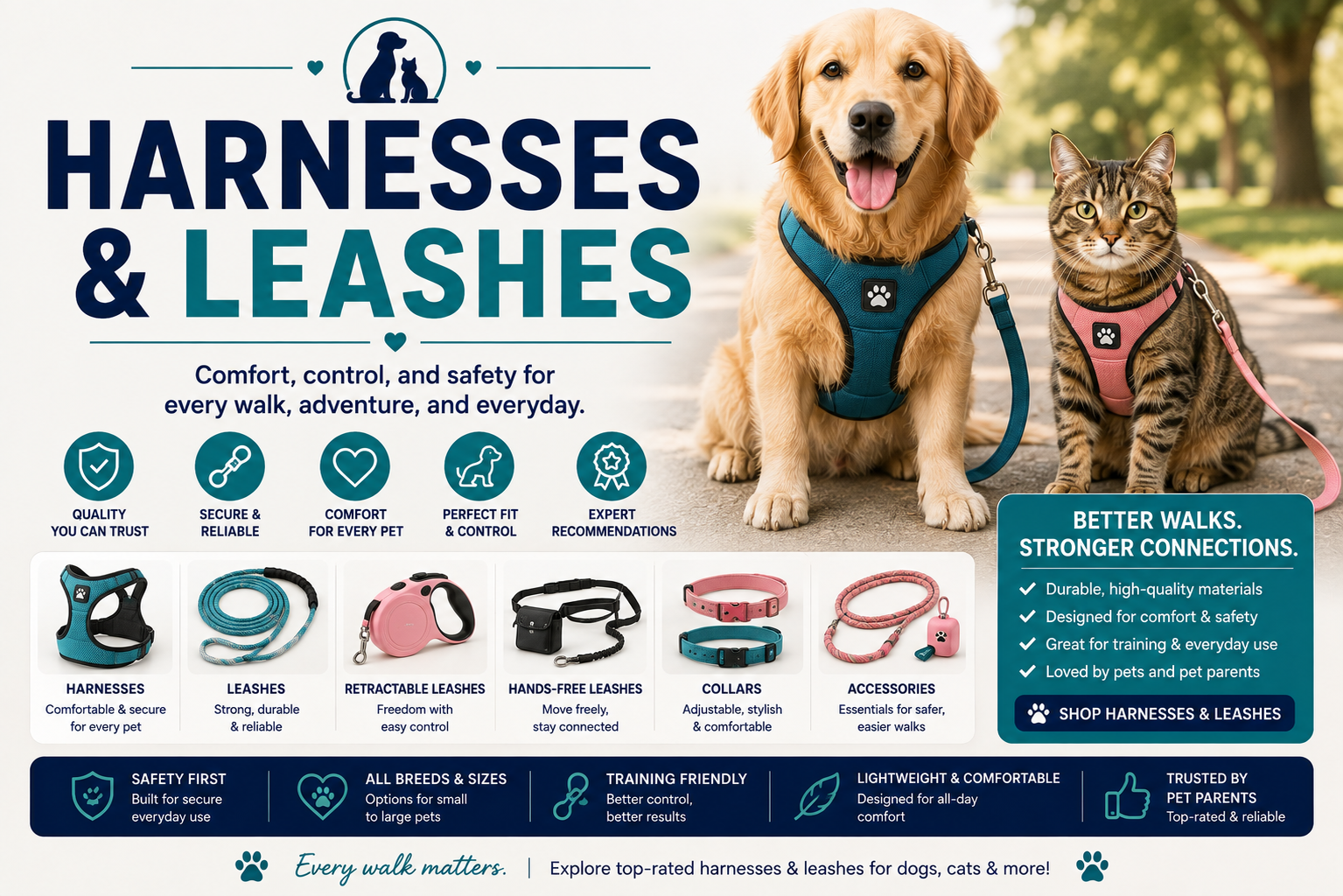
How to Choose a Dog Collar
Learn how to choose a dog collar with practical guidance on sizing, safety, setup, use and the key factors that matter when choosing pet gear.
Quick Answer
Choose a dog collar by neck circumference, head shape, coat, hardware strength, identification needs, and intended use. A flat buckle collar suits most ID purposes, while martingale designs can help dogs whose heads are narrower than their necks when fitted and supervised correctly.
Browse How to Choose a Dog Collar
Use the guide below to compare fit, function, safety, maintenance, and the intended environment.
Open the approved product search.
View Available OptionsHow to Choose and Fit It
Flat buckle collar
Everyday identification
Secure buckle and correct widthMartingale collar
Dogs that slip flat collars
Limited closure and supervised useBreakaway collar
Selected low-risk identification situations
Reliable release and separate walking gearWaterproof collar
Wet, muddy, or frequent outdoor use
Non-absorbing material and corrosion resistanceWhat Matters Most
- Fit: Use exact measurements and current product charts.
- Function: Match the equipment to the real activity or problem.
- Safety: Inspect hardware, moving parts, electronics, or straps.
- Introduction: Test new equipment in a controlled setting.
- Maintenance: Clean, charge, sharpen, or adjust as required.
Side-by-Side Decision Table
| Area or type | Purpose | Priority | Final check |
|---|---|---|---|
| Flat buckle collar | Everyday identification | Secure buckle and correct width | Confirm fit on the individual dog. |
| Martingale collar | Dogs that slip flat collars | Limited closure and supervised use | Confirm fit on the individual dog. |
| Breakaway collar | Selected low-risk identification situations | Reliable release and separate walking gear | Confirm fit on the individual dog. |
| Waterproof collar | Wet, muddy, or frequent outdoor use | Non-absorbing material and corrosion resistance | Confirm fit on the individual dog. |
How the Details Affect the Choice
1. Measure the neck
Place the tape where the collar will sit.
2. Choose an appropriate width
Small dogs need lightweight hardware; large dogs benefit from broader load distribution.
3. Check head shape
Escape-prone dogs may need a limited-slip design.
4. Inspect hardware
Review buckle, D-ring, stitching, rivets, and tag attachment.
5. Fit for daily movement
The collar should rotate slightly without sliding over the head.
6. Use the right tool for walking
Dogs that pull may need a harness rather than neck pressure.
Common Mistakes and Limitations
Leaving a collar so loose that it slips over the head.
Attaching vehicle restraints or strong pulling loads to a collar.
Leaving martingale or snag-prone collars on unattended dogs.
How to Choose a Dog Collar FAQs
What is the most important first step when learning how to choose a dog collar?
Choose a dog collar by neck circumference, head shape, coat, hardware strength, identification needs, and intended use. A flat buckle collar suits most ID purposes, while martingale designs can help dogs whose heads are narrower than their necks when fitted and supervised correctly.
Should I rely on breed or weight labels?
No. Use current body measurements and the exact manufacturer chart because sizing is not standardized.
How can I tell if the fit is wrong?
Look for twisting, rubbing, restricted movement, slipping, coughing, pressure marks, or the ability to back out.
Should fit be checked after the first walk?
Yes. Recheck strap position, skin, coat, and hardware after movement reveals how the product settles.
How often should measurements be updated?
Recheck after growth, weight change, grooming, coat changes, or any visible shift in fit.
Can the same equipment be used for every activity?
Not necessarily. Walking, running, hiking, travel, restraint, and mobility support may require different designs.
What should be inspected before use?
Check stitching, clips, buckles, D-rings, webbing, elastic, edges, and adjustment hardware.
When should the product be replaced?
Replace it after fraying, cracking, bent hardware, failed buckles, stretched straps, or persistent fit problems.
Choose for the Real Pet and Routine
Prioritize fit, safety, compatibility, and practical daily use.
See Current Selection