
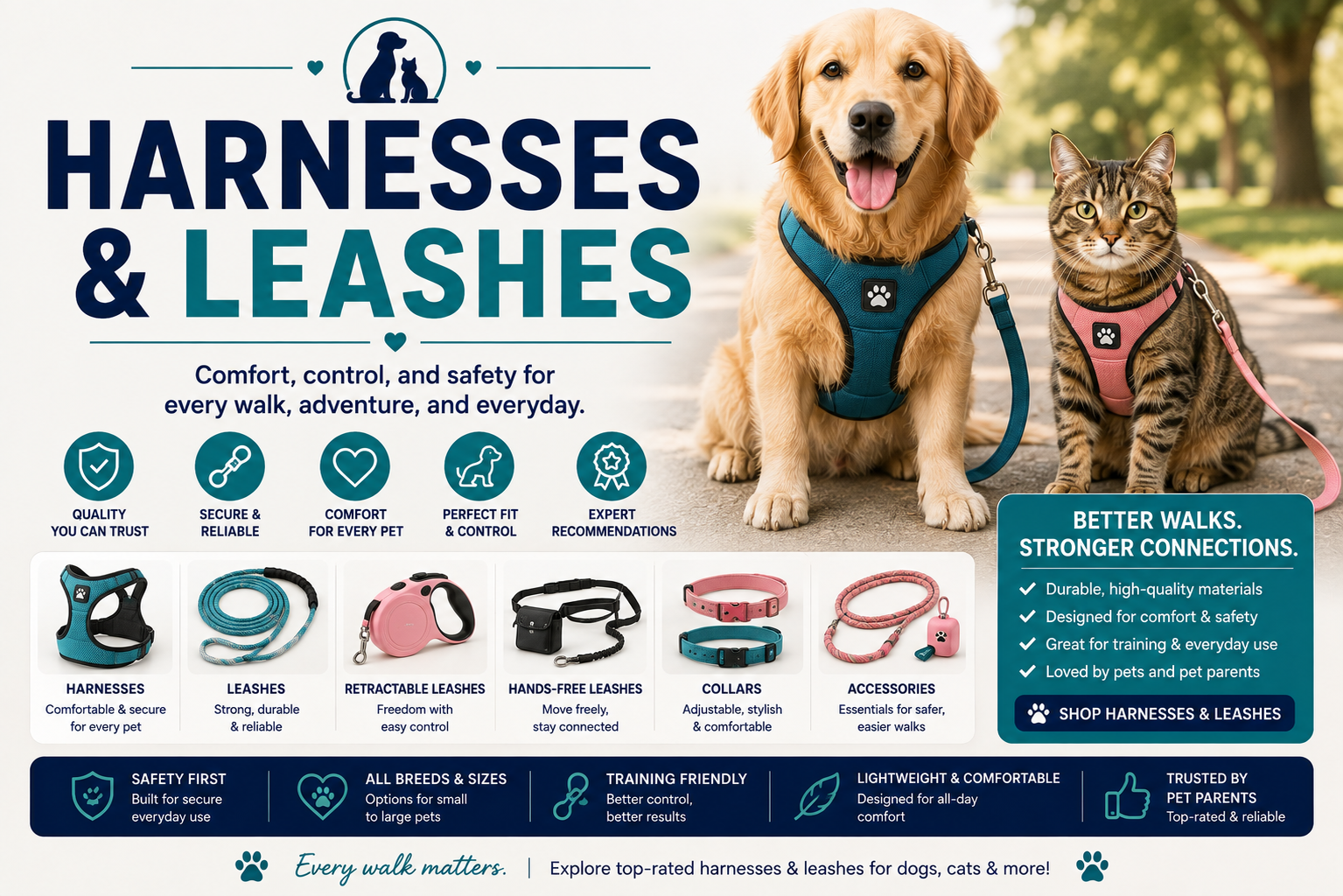
Dog Wheelchairs & Support Harnesses
Explore dog wheelchairs & support harnesses with expert buying guides, product comparisons, setup advice, maintenance tips and practical pet gear recommendations.
Quick Answer
Dog wheelchairs and support harnesses should be selected with veterinary or rehabilitation guidance because weakness, paralysis, arthritis, and recovery needs differ. Correct body measurements, neutral alignment, skin protection, gradual conditioning, and regular adjustment are essential.
Browse Dog Wheelchairs & Support Harnesses
Review the current selection, then use the sizing, safety, compatibility, and maintenance guidance below to narrow the choices.
Open the approved product search in a new tab.
View Available OptionsProduct Types and Use Cases
Rear-support wheelchair
Dogs with hind-limb weakness or paralysis
Frame length, height, saddle fit, and wheel positionFull-support wheelchair
Dogs needing front and rear assistance
Balanced support and steering controlRear-lift harness
Helping with stairs, toileting, and short transfers
Pelvic support, handle placement, and comfortFull-body support harness
Standing, walking, and rehabilitation assistance
Chest, abdomen, and pelvic load distributionWhat Matters Most
- Professional assessment: Identify pain, strength, prognosis, and safe activity before selecting equipment.
- Accurate measurements: Use the manufacturer’s exact height, length, width, and girth method.
- Neutral posture: The device should support movement without twisting the spine or loading joints abnormally.
- Skin checks: Inspect the groin, chest, paws, straps, and pressure points after each early session.
- Conditioning: Increase time gradually because assisted movement still requires strength and endurance.
Product Decision Table
| Product type | Best use | Feature to prioritize | Final check |
|---|---|---|---|
| Rear-support wheelchair | Dogs with hind-limb weakness or paralysis | Frame length, height, saddle fit, and wheel position | Confirm fit, compatibility, and current instructions. |
| Full-support wheelchair | Dogs needing front and rear assistance | Balanced support and steering control | Confirm fit, compatibility, and current instructions. |
| Rear-lift harness | Helping with stairs, toileting, and short transfers | Pelvic support, handle placement, and comfort | Confirm fit, compatibility, and current instructions. |
| Full-body support harness | Standing, walking, and rehabilitation assistance | Chest, abdomen, and pelvic load distribution | Confirm fit, compatibility, and current instructions. |
How to Build a Safer, More Practical Setup
1. Professional assessment
Identify pain, strength, prognosis, and safe activity before selecting equipment.
2. Accurate measurements
Use the manufacturer’s exact height, length, width, and girth method.
3. Neutral posture
The device should support movement without twisting the spine or loading joints abnormally.
4. Skin checks
Inspect the groin, chest, paws, straps, and pressure points after each early session.
5. Conditioning
Increase time gradually because assisted movement still requires strength and endurance.
Common Buying and Setup Mistakes
Buying solely by weight instead of detailed body measurements.
Leaving a dog unattended in a wheelchair or lift harness.
Using mobility equipment without managing dragging injuries, bladder needs, pain, or pressure sores.
Dog Wheelchairs & Support Harnesses FAQs
What is the best starting point for dog wheelchairs & support harnesses?
Dog wheelchairs and support harnesses should be selected with veterinary or rehabilitation guidance because weakness, paralysis, arthritis, and recovery needs differ. Correct body measurements, neutral alignment, skin protection, gradual conditioning, and regular adjustment are essential.
Should I choose equipment by a general size or age label?
No. Use actual body measurements, household layout, behavior, health, and the exact manufacturer instructions.
What maintenance should I expect?
Plan routine cleaning, inspection, charging or battery replacement, food or waste handling, and replacement parts that apply to the product.
Can automation replace daily checks?
No. Cameras, doors, litter systems, feeders, and other devices support care but do not replace direct observation.
What safety issue is commonly overlooked?
Commonly missed issues include wrong sizing, reachable cords, poor traction, unreliable closures, inaccessible cleaning areas, and lack of a manual fallback.
How should new equipment be introduced?
Set it up and test it before relying on it, then introduce it gradually while monitoring comfort, movement, noise response, and behavior.
When should equipment be replaced?
Replace it after cracks, corrosion, failed fasteners, damaged wiring, unreliable controls, exposed filling, contamination, or persistent fit problems.
When should I seek veterinary advice?
Seek professional advice for pain, weakness, appetite changes, repeated accidents, unusual behavior, skin injury, or sudden loss of mobility or function.
Choose the Complete Setup, Not One Isolated Product
Match the equipment to the pet, household, maintenance routine, and long-term care plan.
See Current Selection