
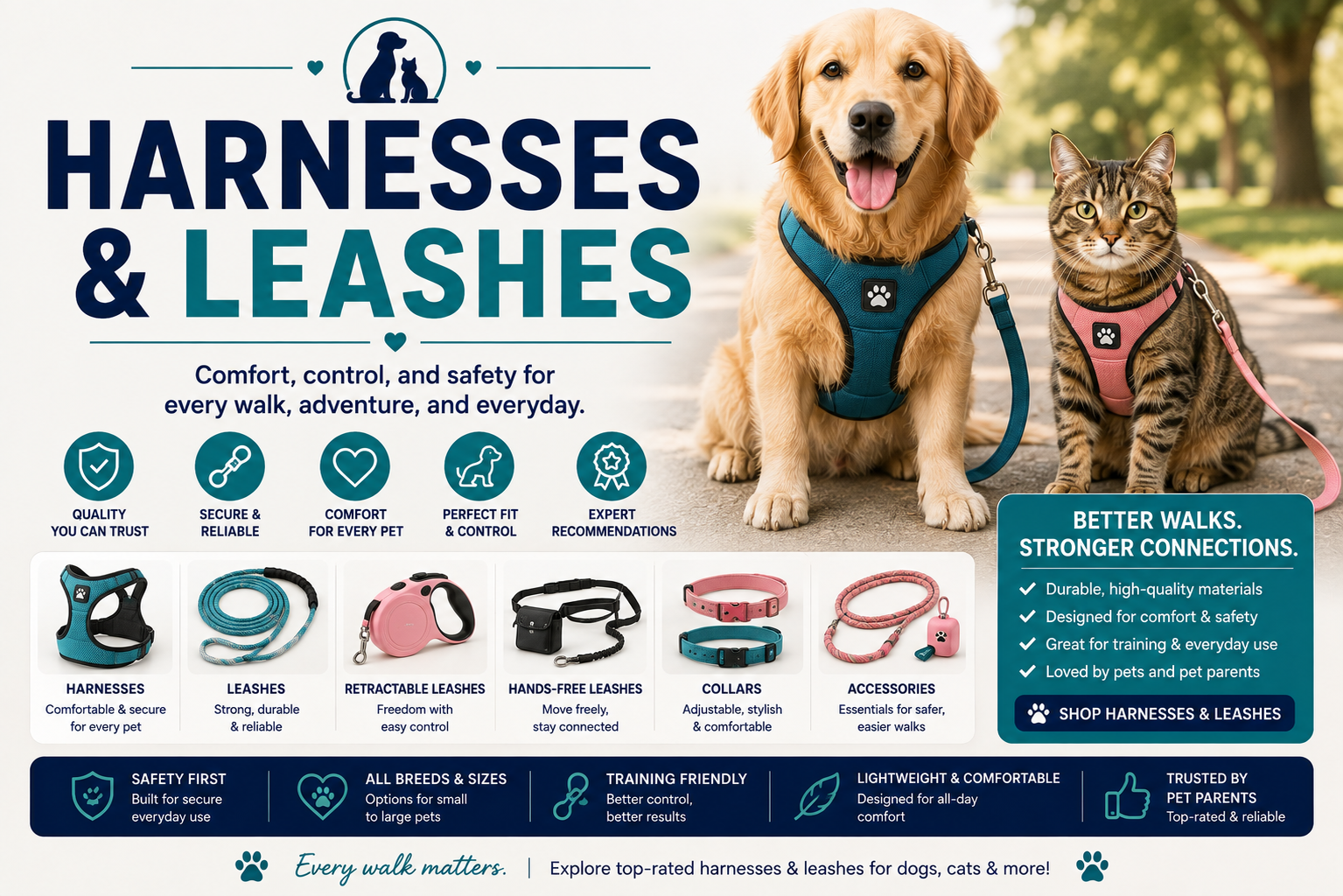
Best Dog Lift Harnesses
Compare the best dog lift harnesses for performance, safety, comfort, durability, ease of use and overall value.
Quick Answer
Choose a dog lift harness by the location of weakness, amount of assistance required, body shape, handle position, toileting access, and how long the harness will be worn. Rear-only slings suit selected hind-end needs, while full-body systems distribute support for transfers and walking.
Browse Best Dog Lift Harnesses
Review the current selection, then use the fit, safety, maintenance, and compatibility guidance below to narrow the choices.
Open the approved product search in a new tab.
View Available OptionsTypes and Use Cases
Start with the format that fits the dog, handler, environment, and primary task.
Rear-lift sling
Brief hindquarter assistance and stairs
Pelvic support and easy toileting accessRear-support harness
Repeated walking and elimination assistance
Secure leg openings and adjustable handlesFull-body lift harness
Standing, transfers, and front-plus-rear support
Balanced chest, abdomen, and pelvic supportRehabilitation harness
Therapy-guided movement and conditioning
Multiple adjustment points and clinician accessWhat Matters Most
- Support location: Match the harness to front, rear, abdominal, or full-body assistance needs.
- Handle placement: The handler should support the dog without twisting either body.
- Fit: Straps should avoid pressure on the throat, genitals, incision, and sensitive skin.
- Toileting: The design should permit normal urination and bowel movements when required.
- Inspection: Check skin and coat frequently during early or extended wear.
Format Comparison
| Type | Best use | Feature to prioritize | Final check |
|---|---|---|---|
| Rear-lift sling | Brief hindquarter assistance and stairs | Pelvic support and easy toileting access | Confirm fit, safe setup, and suitability for the individual dog. |
| Rear-support harness | Repeated walking and elimination assistance | Secure leg openings and adjustable handles | Confirm fit, safe setup, and suitability for the individual dog. |
| Full-body lift harness | Standing, transfers, and front-plus-rear support | Balanced chest, abdomen, and pelvic support | Confirm fit, safe setup, and suitability for the individual dog. |
| Rehabilitation harness | Therapy-guided movement and conditioning | Multiple adjustment points and clinician access | Confirm fit, safe setup, and suitability for the individual dog. |
How to Choose More Confidently
1. Support location
Match the harness to front, rear, abdominal, or full-body assistance needs.
2. Handle placement
The handler should support the dog without twisting either body.
3. Fit
Straps should avoid pressure on the throat, genitals, incision, and sensitive skin.
4. Toileting
The design should permit normal urination and bowel movements when required.
5. Inspection
Check skin and coat frequently during early or extended wear.
Common Buying and Use Mistakes
Using a narrow improvised towel sling for prolonged support.
Lifting the dog high enough to remove all normal limb contact when partial support is intended.
Leaving a mobility harness on unattended when it may snag or shift.
Best Dog Lift Harnesses FAQs
How do I choose the right size or format for best dog lift harnesses?
Use the exact manufacturer measurements and compare them with the individual dog’s body dimensions, coat, health, behavior, and intended use. Do not rely on breed labels alone.
Which safety feature matters most?
Match the harness to front, rear, abdominal, or full-body assistance needs. Then verify the remaining fit, material, cleaning, and supervision requirements.
How should the product be introduced?
Introduce it in short reward-based sessions. Begin with the product stationary or inactive before adding movement, noise, pressure, distance, or a more difficult environment.
Can it be used without supervision?
That depends on the product, but new grooming tools, recovery wear, mobility devices, first-aid supplies, and bicycle carriers should be tested and used under direct supervision.
How often should it be inspected?
Inspect before each important use and after chewing, impact, washing, heavy wear, or a difficult session. Check straps, seams, hardware, working edges, frames, and closures.
When should it be replaced?
Replace the product after cracks, fraying, bent parts, dull working surfaces, failed fasteners, exposed filling, contamination, or any condition that makes reliable use difficult.
Does a higher price guarantee better safety?
No. Transparent specifications, correct fit, appropriate materials, stable construction, maintenance access, and suitability for the individual dog matter more than price alone.
When should I consult a veterinarian or specialist?
Seek professional guidance for pain, dental disease, surgery recovery, wounds, mobility loss, skin irritation, neurologic signs, or uncertainty about whether the equipment is appropriate.
Choose for the Dog and the Real Use Case
Prioritize correct fit, safe construction, practical maintenance, and suitability for the dog’s health and routine.
See Current Selection