
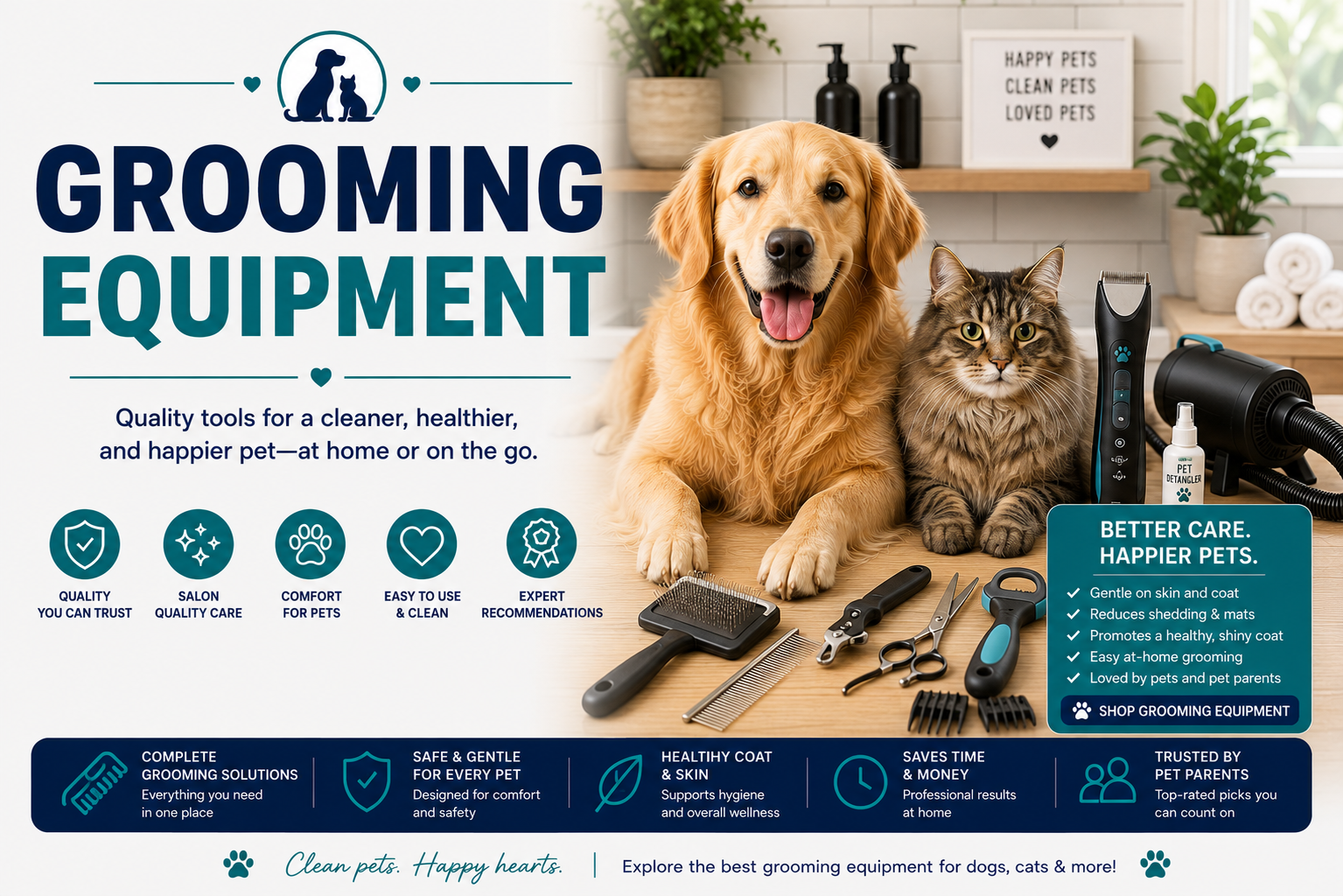
Deshedding Tool vs Slicker Brush
Compare Deshedding Tool vs Slicker Brush by features, fit, safety, ease of use, value and the type of pet owner each option suits best.
Quick Answer
A deshedding tool removes loose undercoat and is most useful during seasonal shedding in compatible double coats. A slicker brush removes surface hair, light tangles, and small mats across many coat types. Choose the deshedding tool for undercoat release and the slicker for routine brushing, finishing, and tangle prevention.
Deshedding Tool vs Slicker Brush — products that make the differences concrete
Use these current products and product families to see how the tradeoffs discussed in this comparison show up in real buying choices.
FURminator deShedding Tool
Stainless deShedding edge targets loose undercoat on shedding breeds.
CHECK CURRENT PRICESChris Christensen Big G Slicker Brush
Long pins and dense pad designed for coat separation and fluffing.
CHECK CURRENT PRICESHertzko Self-Cleaning Slicker Brush
Retractable-pin mechanism simplifies fur removal from the brush.
CHECK CURRENT PRICESSafari Dual-Sided Pin & Bristle Brush
Two brush surfaces cover light detangling and coat finishing.
CHECK CURRENT PRICESDeshedding Tool vs Slicker Brush comparison
| Product / family | Best for | Why compare it | What to verify | Action |
|---|---|---|---|---|
| FURminator deShedding Tool | Best for heavy shedding | Stainless deShedding edge targets loose undercoat on shedding breeds. | Match pin/edge type to coat and skin sensitivity; aggressive deshedding can irritate skin or damage coat. | CHECK PRICES |
| Chris Christensen Big G Slicker Brush | Best premium slicker | Long pins and dense pad designed for coat separation and fluffing. | Match pin/edge type to coat and skin sensitivity; aggressive deshedding can irritate skin or damage coat. | CHECK PRICES |
| Hertzko Self-Cleaning Slicker Brush | Best easy-clean slicker | Retractable-pin mechanism simplifies fur removal from the brush. | Match pin/edge type to coat and skin sensitivity; aggressive deshedding can irritate skin or damage coat. | CHECK PRICES |
| Safari Dual-Sided Pin & Bristle Brush | Best general-purpose value | Two brush surfaces cover light detangling and coat finishing. | Match pin/edge type to coat and skin sensitivity; aggressive deshedding can irritate skin or damage coat. | CHECK PRICES |
Which option fits which buyer?
FURminator deShedding Tool
Stainless deShedding edge targets loose undercoat on shedding breeds.
Before buying: Match pin/edge type to coat and skin sensitivity; aggressive deshedding can irritate skin or damage coat.
Chris Christensen Big G Slicker Brush
Long pins and dense pad designed for coat separation and fluffing.
Before buying: Match pin/edge type to coat and skin sensitivity; aggressive deshedding can irritate skin or damage coat.
Hertzko Self-Cleaning Slicker Brush
Retractable-pin mechanism simplifies fur removal from the brush.
Before buying: Match pin/edge type to coat and skin sensitivity; aggressive deshedding can irritate skin or damage coat.
Safari Dual-Sided Pin & Bristle Brush
Two brush surfaces cover light detangling and coat finishing.
Before buying: Match pin/edge type to coat and skin sensitivity; aggressive deshedding can irritate skin or damage coat.
Explore Deshedding Tool vs Slicker Brush
Review the current selection, then compare fit, compatibility, maintenance, space, and the real problem each option solves.
Open the approved product search.
View Current OptionsMain Options and Use Cases
Undercoat deshedding edge
Seasonal coat blow and dense double coats
Correct coat length, body size, and controlled pressureUndercoat rake
Thick or long undercoat
Tooth length that reaches undercoat without scraping skinFine-pin slicker
Routine brushing and light tangles
Flexible pins, protected tips, and gentle pressureLong-pin slicker
Long, curly, or dense coats
Pin length, cushion flexibility, and coat sectioningWhat Matters Most
- Coat type: Not every dog has an undercoat suited to deshedding tools.
- Skin comfort: Use light pressure and stop after redness, pain, or broken hair.
- Tangles: Slickers help prevent tangles, but tight mats may need professional care.
- Session length: Short repeated passes are safer than scraping one area.
- Tool maintenance: Remove trapped coat and replace bent or damaged teeth.
Side-by-Side Decision Table
| Option | Best use | Feature to prioritize | Final check |
|---|---|---|---|
| Undercoat deshedding edge | Seasonal coat blow and dense double coats | Correct coat length, body size, and controlled pressure | Confirm pet fit, compatibility, and current product details. |
| Undercoat rake | Thick or long undercoat | Tooth length that reaches undercoat without scraping skin | Confirm pet fit, compatibility, and current product details. |
| Fine-pin slicker | Routine brushing and light tangles | Flexible pins, protected tips, and gentle pressure | Confirm pet fit, compatibility, and current product details. |
| Long-pin slicker | Long, curly, or dense coats | Pin length, cushion flexibility, and coat sectioning | Confirm pet fit, compatibility, and current product details. |
How to Choose More Confidently
1. Coat type
Not every dog has an undercoat suited to deshedding tools.
2. Skin comfort
Use light pressure and stop after redness, pain, or broken hair.
3. Tangles
Slickers help prevent tangles, but tight mats may need professional care.
4. Session length
Short repeated passes are safer than scraping one area.
5. Tool maintenance
Remove trapped coat and replace bent or damaged teeth.
Common Comparison Mistakes
Using a deshedding blade on an incompatible coat.
Pressing a slicker hard enough to scratch the skin.
Trying to pull through tight skin-level mats.
Deshedding Tool vs Slicker Brush FAQs
What is the main difference in deshedding tool vs slicker brush?
A deshedding tool removes loose undercoat and is most useful during seasonal shedding in compatible double coats. A slicker brush removes surface hair, light tangles, and small mats across many coat types. Choose the deshedding tool for undercoat release and the slicker for routine brushing, finishing, and tangle prevention.
Which option is better for most owners?
The better option depends on the pet, household, long-term goal, available space, maintenance tolerance, and the exact problem being solved.
What should I compare first?
Compare usable dimensions, fit, safety, cleaning, recurring cost, and whether the product supports the intended routine.
Does the more expensive option always work better?
No. Added complexity or premium materials only help when they match the pet and use case.
How should a new option be introduced?
Introduce it gradually with rewards, keep familiar alternatives available, and observe comfort and behavior before relying on it.
What ongoing maintenance is required?
Inspect, clean, dry, adjust, charge, or replace components according to the specific product and frequency of use.
When should the product be replaced?
Replace it after cracks, fraying, failed hardware, sharp wear, contamination, unreliable operation, or loss of fit.
When should I seek professional guidance?
Consult a veterinarian, qualified trainer, groomer, behavior professional, or avian specialist when pain, mobility, anxiety, coat disease, elimination problems, or housing risk is involved.
Choose the Option That Fits the Real Need
Prioritize correct compatibility, safe use, practical maintenance, and the pet or household’s actual routine.
See Current SelectionKEEP EXPLORING
Related guides and comparisons
Use these closely related PetSupplyGuide resources to compare options, understand fit and make the next buying decision with better context.