
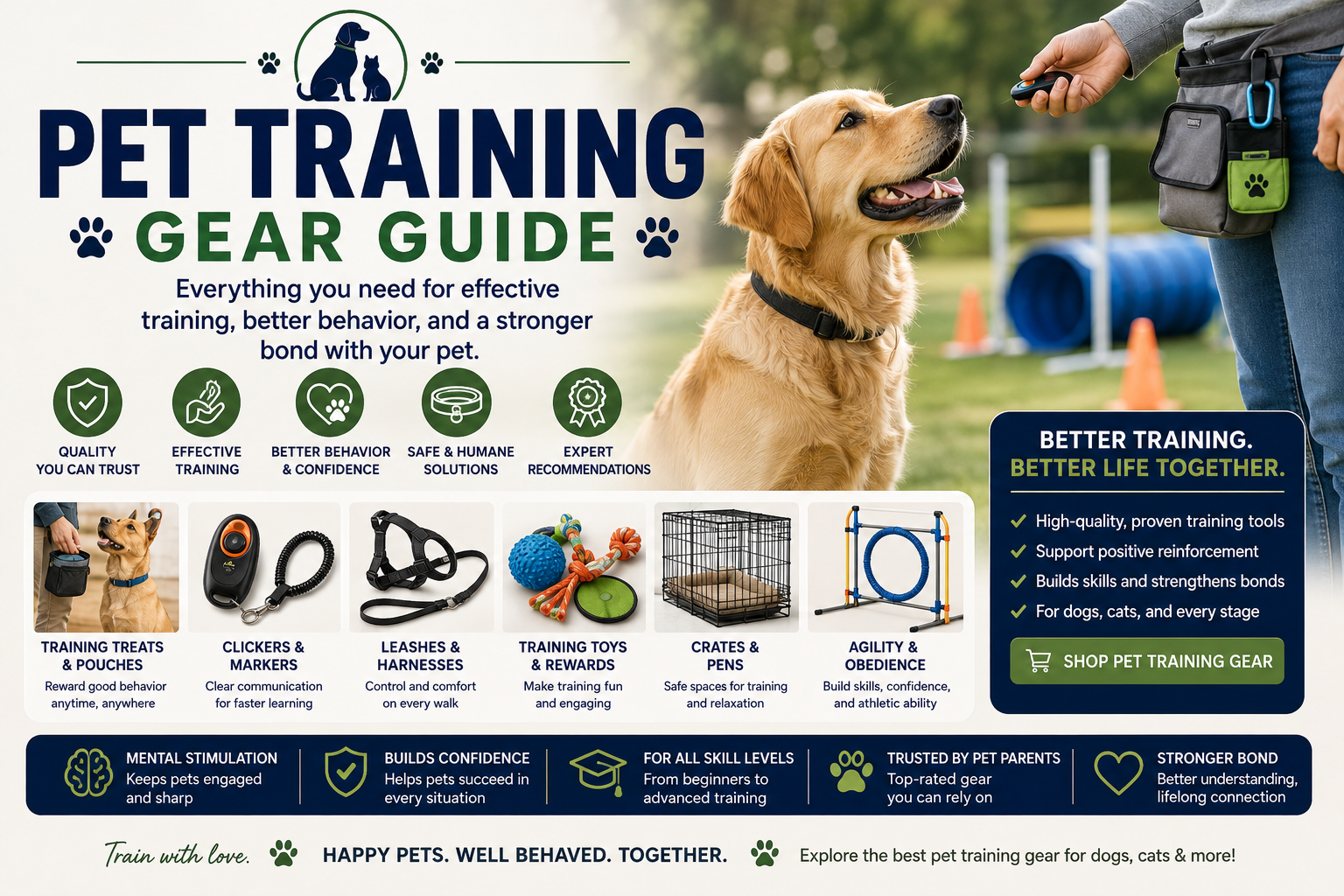
Pet Training
Reward-focused guidance for clickers, treat pouches, leashes, long lines, gates, crates and other training-support equipment.
Quick Answer
Training tools should make timing, management and communication easier without causing fear or pain. Start with rewards, clear cues, short sessions and equipment that fits securely and allows normal movement.
Pet Training: current products worth comparing
These options match the specific buying intent of this page. Compare the product itself—not just the brand name—then verify sizing, compatibility and current specifications before ordering.
Blue-9 Balance Harness
Highly adjustable harness useful when fit and leash mechanics matter.
CHECK CURRENT PRICESPetSafe Easy Walk Harness
Front attachment changes leash leverage for dogs that pull.
CHECK CURRENT PRICESKaren Pryor i-Click
Compact mechanical marker tool for reward-based training.
CHECK CURRENT PRICESMighty Paw Long Dog Leash
Long training lead useful for recalls and distance work in appropriate open spaces.
CHECK CURRENT PRICESPet Training comparison
| Product / family | Best for | Why compare it | What to verify | Action |
|---|---|---|---|---|
| Blue-9 Balance Harness | Best adjustable training harness | Highly adjustable harness useful when fit and leash mechanics matter. | Measure chest girth carefully and check shoulder/elbow clearance; a good model can still fit the wrong dog poorly. | CHECK PRICES |
| PetSafe Easy Walk Harness | Best front-clip walking aid | Front attachment changes leash leverage for dogs that pull. | Measure chest girth carefully and check shoulder/elbow clearance; a good model can still fit the wrong dog poorly. | CHECK PRICES |
| Karen Pryor i-Click | Best clicker reference | Compact mechanical marker tool for reward-based training. | Verify current dimensions, materials, compatibility and manufacturer instructions for the exact model before buying. | CHECK PRICES |
| Mighty Paw Long Dog Leash | Best long-line reference | Long training lead useful for recalls and distance work in appropriate open spaces. | Match leash length and hardware to dog size, environment and training goal; retractable lines add distance and entanglement risk. | CHECK PRICES |
Which option fits which buyer?
Blue-9 Balance Harness
Highly adjustable harness useful when fit and leash mechanics matter.
Before buying: Measure chest girth carefully and check shoulder/elbow clearance; a good model can still fit the wrong dog poorly.
PetSafe Easy Walk Harness
Front attachment changes leash leverage for dogs that pull.
Before buying: Measure chest girth carefully and check shoulder/elbow clearance; a good model can still fit the wrong dog poorly.
Karen Pryor i-Click
Compact mechanical marker tool for reward-based training.
Before buying: Verify current dimensions, materials, compatibility and manufacturer instructions for the exact model before buying.
Mighty Paw Long Dog Leash
Long training lead useful for recalls and distance work in appropriate open spaces.
Before buying: Match leash length and hardware to dog size, environment and training goal; retractable lines add distance and entanglement risk.
Compare Current Pet Training Options
Browse current options, then use the decision criteria below to narrow the selection by fit, safety, maintenance and real daily use.
Open the current category selection in a new tab.
View Available OptionsKey Pet Training Decisions
Use these topic areas to move from a broad need to a more confident, specific choice.
Rewards & Markers
Clickers, treat pouches and fast access to reinforcement.
Explore this guideLeashes & Long Lines
Distance, control and safe practice in appropriate spaces.
Explore this guideManagement Tools
Gates, pens and crates that prevent rehearsal of unwanted behavior.
Explore this guidePotty Training
Schedules, confinement, cleanup and consistent outdoor access.
Explore this guideRecall Training
Long-line handling and high-value reinforcement.
Explore this guideTraining Collars
Fit, intended use and lower-risk alternatives before aversive tools.
Explore this guideWhat Matters Most
- Use equipment to support—not replace—training
- Choose secure, comfortable fit
- Keep sessions short and reinforcement clear
- Prevent tangling and unsafe long-line use
- Seek qualified help for aggression, fear or severe anxiety
A Practical Comparison Framework
| Criterion | What to check | Why it matters | Warning sign |
|---|---|---|---|
| Fit | Exact measurements and adjustment range | Reduces discomfort, escape and restricted movement | Only generic size labels are provided |
| Safety | Closures, stability, ventilation and materials | Helps control predictable ownership risks | Loose parts or unclear intended use |
| Maintenance | Cleaning access, consumables and replacement parts | Determines whether the product remains hygienic and usable | Critical areas cannot be cleaned |
| Daily use | Setup, storage, noise and handling | Affects whether owners use the product consistently | Complexity exceeds the benefit |
| Value | Durability and frequency of use | Provides a better measure than price alone | Decorative extras replace core function |
How to Choose More Confidently
1. Use the decision
Use equipment to support—not replace—training
2. Choose the decision
Choose secure, comfortable fit
3. Keep the decision
Keep sessions short and reinforcement clear
4. Prevent the decision
Prevent tangling and unsafe long-line use
5. Seek the decision
Seek qualified help for aggression, fear or severe anxiety
Common Buying Mistakes
1. Expecting a tool to solve behavior by itself.
2. Using poor timing or inconsistent cues.
3. Leaving long lines attached without supervision.
4. Escalating correction instead of adjusting the plan.
5. Training through signs of fear or physical discomfort.
Pet Training FAQs
Which training tool should beginners buy first?
A comfortable leash, small rewards and a marker such as a clicker can support clear, reward-based practice.
Can a clicker train any pet?
A clicker can mark desired behavior for many animals, but the sound must first be paired with a reward and should not frighten the pet.
How long should training sessions be?
Short, successful sessions are usually easier to repeat and keep the learner engaged.
What is a long line used for?
It supports distance practice such as recall while maintaining control in an appropriate open area.
Are training collars necessary?
Many goals can be taught with rewards, management and well-fitted standard equipment. Discuss higher-risk tools with a qualified professional.
How can equipment improve potty training?
Crates, pens and gates can support a consistent schedule, but they must be correctly sized and never used as punishment.
When should professional help be sought?
Seek help for aggression, severe fear, separation distress or behavior that risks injury.
Why does fit matter during training?
Poorly fitted equipment can cause discomfort, distraction, escape or injury and undermine learning.
Choose Gear That Fits Real Daily Life
Confirm the fit, intended use, maintenance and safety requirements before deciding.
See Current SelectionKEEP EXPLORING
Related guides and comparisons
Use these closely related PetSupplyGuide resources to compare options, understand fit and make the next buying decision with better context.