
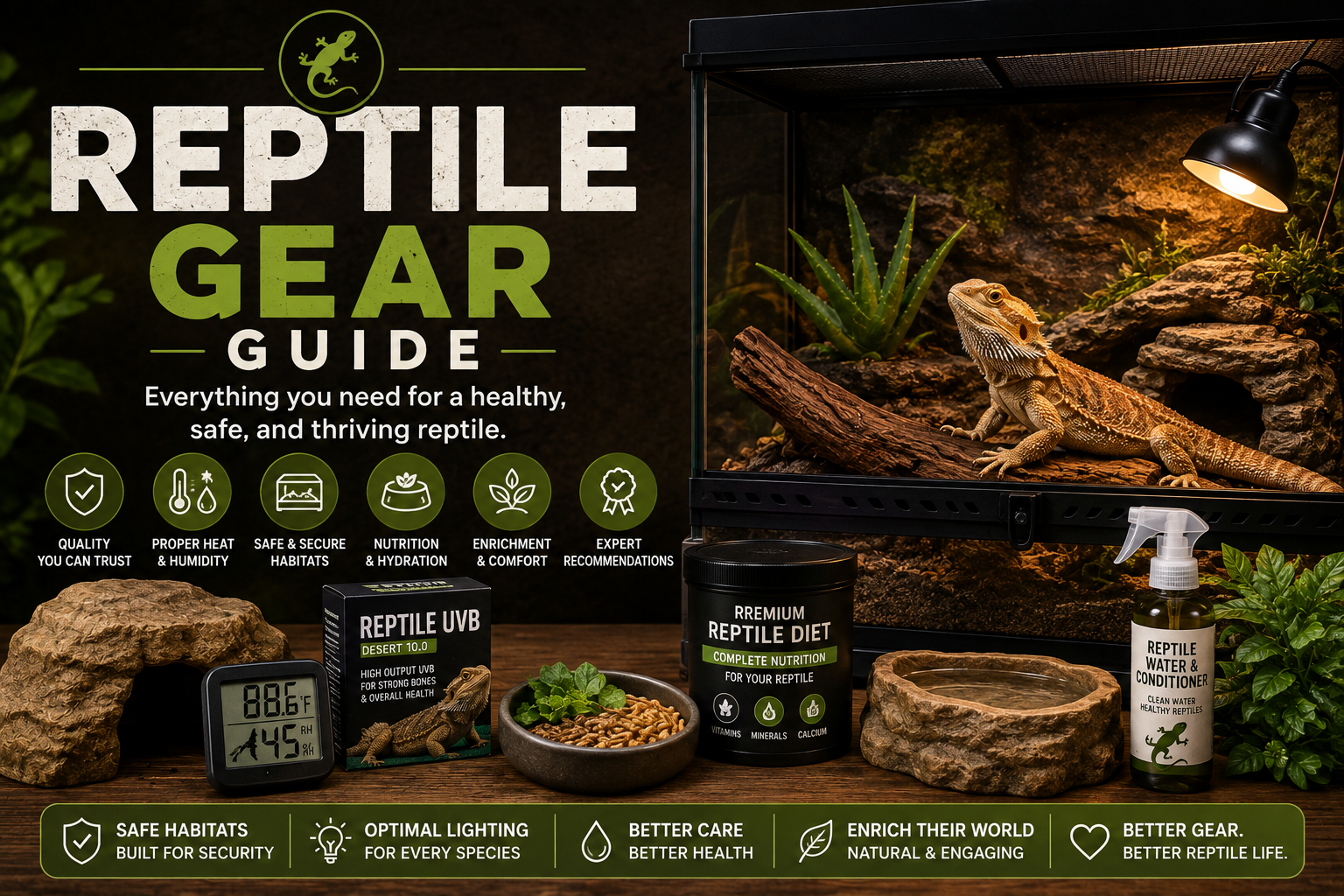
Reptile Gear
Explore reptile gear with expert buying guides, product comparisons, setup advice, maintenance tips and practical pet gear recommendations.
Quick Answer
Reptile gear must be built around the exact species’ adult size, temperature gradient, basking needs, humidity, UVB requirements, ventilation, substrate safety, hiding behavior, and diet. Generic reptile kits are rarely complete for every species.
Reptile Gear: current products worth comparing
These options match the specific buying intent of this page. Compare the product itself—not just the brand name—then verify sizing, compatibility and current specifications before ordering.
Zoo Med ReptiSun T5 HO UVB Fixture
Linear T5 UVB fixture family for species-appropriate ultraviolet coverage.
CHECK CURRENT PRICESArcadia ProT5 UVB Kit
Integrated T5 fixture and reflector system with species-specific bulb options.
CHECK CURRENT PRICESExo Terra Glass Terrarium
Front-opening terrarium line with ventilation and cable-management features.
CHECK CURRENT PRICESMistKing Starter Misting System
Expandable high-pressure misting system for humidity-dependent enclosures.
CHECK CURRENT PRICESReptile Gear comparison
| Product / family | Best for | Why compare it | What to verify | Action |
|---|---|---|---|---|
| Zoo Med ReptiSun T5 HO UVB Fixture | Best UVB-system reference | Linear T5 UVB fixture family for species-appropriate ultraviolet coverage. | Species-specific husbandry determines enclosure, heat, UVB and humidity; verify distances and temperatures with instruments. | CHECK PRICES |
| Arcadia ProT5 UVB Kit | Best premium linear UVB reference | Integrated T5 fixture and reflector system with species-specific bulb options. | Species-specific husbandry determines enclosure, heat, UVB and humidity; verify distances and temperatures with instruments. | CHECK PRICES |
| Exo Terra Glass Terrarium | Best glass habitat reference | Front-opening terrarium line with ventilation and cable-management features. | Species-specific husbandry determines enclosure, heat, UVB and humidity; verify distances and temperatures with instruments. | CHECK PRICES |
| MistKing Starter Misting System | Best automated misting reference | Expandable high-pressure misting system for humidity-dependent enclosures. | Species-specific husbandry determines enclosure, heat, UVB and humidity; verify distances and temperatures with instruments. | CHECK PRICES |
Which option fits which buyer?
Zoo Med ReptiSun T5 HO UVB Fixture
Linear T5 UVB fixture family for species-appropriate ultraviolet coverage.
Before buying: Species-specific husbandry determines enclosure, heat, UVB and humidity; verify distances and temperatures with instruments.
Arcadia ProT5 UVB Kit
Integrated T5 fixture and reflector system with species-specific bulb options.
Before buying: Species-specific husbandry determines enclosure, heat, UVB and humidity; verify distances and temperatures with instruments.
Exo Terra Glass Terrarium
Front-opening terrarium line with ventilation and cable-management features.
Before buying: Species-specific husbandry determines enclosure, heat, UVB and humidity; verify distances and temperatures with instruments.
MistKing Starter Misting System
Expandable high-pressure misting system for humidity-dependent enclosures.
Before buying: Species-specific husbandry determines enclosure, heat, UVB and humidity; verify distances and temperatures with instruments.
Browse Current Reptile Gear Options
Review the current selection, then use the category, setup, compatibility, and maintenance guidance below to narrow the choices.
Open the approved product search in a new tab.
View Available OptionsMain Product Families
Start with the system or category that solves the immediate care need, then compare the exact product.
Enclosures
Primary habitat and secure containment
Adult dimensions, ventilation, and escape resistanceHeating and thermostats
Creating safe thermal gradients
Controlled heat source, probe placement, and guardsLighting and UVB
Species-specific light exposure
Lamp type, distance, replacement schedule, and shieldingHumidity and habitat accessories
Hides, substrate, water, and monitoring
Species fit, hygiene, and accurate gaugesWhat Matters Most
- Species research: Use husbandry requirements for the exact reptile, not broad reptile averages.
- Temperature gradient: Provide warm and cool zones with accurate measurement.
- Thermostat control: Unregulated heaters can cause burns, overheating, or fire risk.
- Ventilation and humidity: Do not restrict airflow simply to hold humidity.
- Hygiene: Wash hands after handling the reptile, food, waste, water, or habitat equipment.
Category Decision Table
| Product family | Best use | Feature to prioritize | Final check |
|---|---|---|---|
| Enclosures | Primary habitat and secure containment | Adult dimensions, ventilation, and escape resistance | Confirm species, pet, habitat, or household compatibility. |
| Heating and thermostats | Creating safe thermal gradients | Controlled heat source, probe placement, and guards | Confirm species, pet, habitat, or household compatibility. |
| Lighting and UVB | Species-specific light exposure | Lamp type, distance, replacement schedule, and shielding | Confirm species, pet, habitat, or household compatibility. |
| Humidity and habitat accessories | Hides, substrate, water, and monitoring | Species fit, hygiene, and accurate gauges | Confirm species, pet, habitat, or household compatibility. |
How to Build a Safer, More Practical Setup
1. Species research
Use husbandry requirements for the exact reptile, not broad reptile averages.
2. Temperature gradient
Provide warm and cool zones with accurate measurement.
3. Thermostat control
Unregulated heaters can cause burns, overheating, or fire risk.
4. Ventilation and humidity
Do not restrict airflow simply to hold humidity.
5. Hygiene
Wash hands after handling the reptile, food, waste, water, or habitat equipment.
Common Buying and Setup Mistakes
Using heat rocks or unregulated heat sources.
Placing UVB too far away or behind material that blocks useful output.
Choosing an enclosure for juvenile size without planning adult space.
Reptile Gear FAQs
What is the best starting point for reptile gear?
Reptile gear must be built around the exact species’ adult size, temperature gradient, basking needs, humidity, UVB requirements, ventilation, substrate safety, hiding behavior, and diet. Generic reptile kits are rarely complete for every species.
Should I buy a complete kit or individual components?
A kit can simplify the first purchase, but verify every included component against the species, pet, habitat, or household requirements. Replace unsuitable pieces rather than assuming the kit is complete.
How should I compare sizes or capacities?
Use adult animal dimensions, usable interior space, water volume, biological load, household layout, and the manufacturer’s current specifications.
What maintenance should I plan for?
Create a routine for cleaning, inspection, replacement parts, water or food contact, batteries, filters, pumps, sensors, and wear that apply to the equipment.
Can automation replace daily checks?
No. Smart devices, feeders, filters, fountains, and automated systems support care but do not replace direct observation of the animal and equipment.
What safety issue is most often overlooked?
Owners often overlook incompatible materials, poor ventilation, uncontrolled heat, inaccessible cleaning areas, unstable placement, or equipment sized only by a general label.
When should equipment be replaced?
Replace it after cracks, corrosion, damaged wiring, unreliable controls, sharp edges, leaks, persistent contamination, or any condition that prevents dependable use.
When should I consult a veterinarian or specialist?
Seek species-appropriate professional help for illness, appetite or mobility changes, abnormal behavior, habitat uncertainty, or any setup that depends on medical or specialized husbandry needs.
Choose the Complete System, Not One Isolated Product
Match the equipment to the species, environment, maintenance routine, and long-term care plan.
See Current SelectionKEEP EXPLORING
Related guides and comparisons
Use these closely related PetSupplyGuide resources to compare options, understand fit and make the next buying decision with better context.