
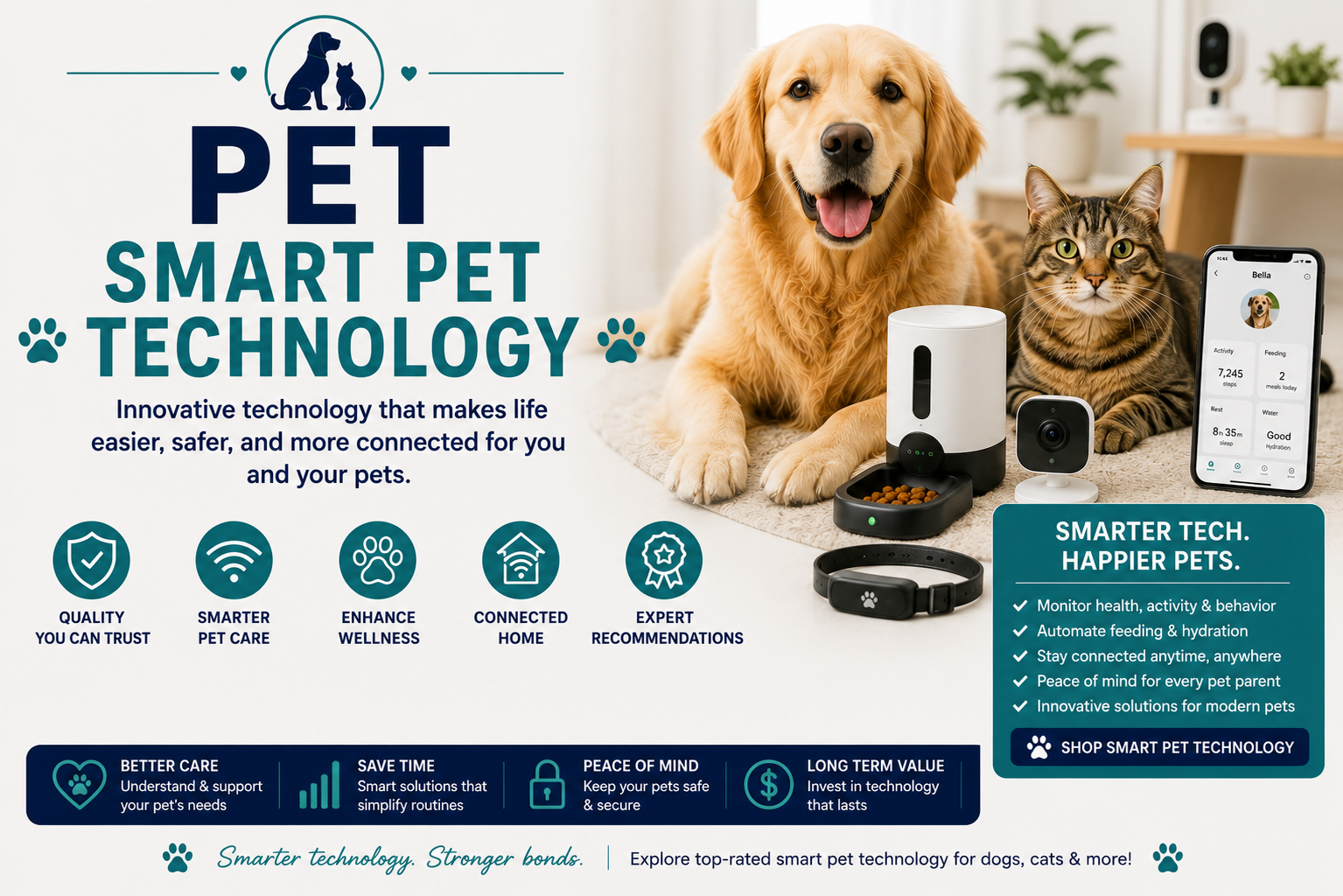
Smart Pet Technology
Explore smart pet technology with expert buying guides, product comparisons, setup advice, maintenance tips and practical pet gear recommendations.
Quick Answer
Smart pet technology is most useful when it solves one clear problem—monitoring, location recovery, feeding, access control, litter management, or health trend tracking. Evaluate connectivity, subscriptions, privacy, battery or power backup, cleaning, and what remains functional when the app or network is unavailable.
Smart Pet Technology: current products worth comparing
These options match the specific buying intent of this page. Compare the product itself—not just the brand name—then verify sizing, compatibility and current specifications before ordering.
Tractive GPS Tracker
Cellular tracker for location, escape alerts and activity data.
CHECK CURRENT PRICESFurbo 360° Dog Camera
Rotating pet camera with two-way audio, alerts and treat tossing.
CHECK CURRENT PRICESPETLIBRO Granary Smart Feeder
Smart scheduled feeder with remote controls and meal scheduling.
CHECK CURRENT PRICESLitter-Robot 4
Automatic litter-box platform with app monitoring and usage data.
CHECK CURRENT PRICESSmart Pet Technology comparison
| Product / family | Best for | Why compare it | What to verify | Action |
|---|---|---|---|---|
| Tractive GPS Tracker | Best live GPS tracking | Cellular tracker for location, escape alerts and activity data. | Check cellular coverage, subscription cost, battery life, collar fit and whether the device supports live escape tracking. | CHECK PRICES |
| Furbo 360° Dog Camera | Best interactive camera | Rotating pet camera with two-way audio, alerts and treat tossing. | Compare privacy controls, subscription requirements, night view, two-way audio and whether treat features fit the pet. | CHECK PRICES |
| PETLIBRO Granary Smart Feeder | Best feeding automation | Smart scheduled feeder with remote controls and meal scheduling. | Test real kibble size and portion output, clean food-contact parts often and plan for power/network failures. | CHECK PRICES |
| Litter-Robot 4 | Best litter automation | Automatic litter-box platform with app monitoring and usage data. | Confirm cat size, entry style, litter compatibility, cleaning access and safe sensor behavior before relying on automation. | CHECK PRICES |
Which option fits which buyer?
Tractive GPS Tracker
Cellular tracker for location, escape alerts and activity data.
Before buying: Check cellular coverage, subscription cost, battery life, collar fit and whether the device supports live escape tracking.
Furbo 360° Dog Camera
Rotating pet camera with two-way audio, alerts and treat tossing.
Before buying: Compare privacy controls, subscription requirements, night view, two-way audio and whether treat features fit the pet.
PETLIBRO Granary Smart Feeder
Smart scheduled feeder with remote controls and meal scheduling.
Before buying: Test real kibble size and portion output, clean food-contact parts often and plan for power/network failures.
Litter-Robot 4
Automatic litter-box platform with app monitoring and usage data.
Before buying: Confirm cat size, entry style, litter compatibility, cleaning access and safe sensor behavior before relying on automation.
Browse Current Smart Pet Technology Options
Review the current selection, then use the category, setup, compatibility, and maintenance guidance below to narrow the choices.
Open the approved product search in a new tab.
View Available OptionsMain Product Families
Start with the system or category that solves the immediate care need, then compare the exact product.
Pet cameras
Remote viewing, alerts, and interaction
Account security, field of view, and pet responseGPS trackers
Location and escape alerts
Coverage, battery, subscription, and attachmentSmart doors and feeders
Controlled access and scheduled care
Recognition reliability and offline behaviorConnected litter and health devices
Usage and trend monitoring
Pet eligibility, sensors, and cleaning accessWhat Matters Most
- Primary purpose: Choose the problem first instead of buying features without a plan.
- Connectivity: Confirm Wi-Fi, cellular, hub, app, and regional requirements.
- Privacy: Use unique passwords, available multifactor authentication, and current firmware.
- Fallback operation: Know what happens during power, internet, or service interruption.
- Pet welfare: Technology should support—not replace—direct care and professional assessment.
Category Decision Table
| Product family | Best use | Feature to prioritize | Final check |
|---|---|---|---|
| Pet cameras | Remote viewing, alerts, and interaction | Account security, field of view, and pet response | Confirm species, pet, habitat, or household compatibility. |
| GPS trackers | Location and escape alerts | Coverage, battery, subscription, and attachment | Confirm species, pet, habitat, or household compatibility. |
| Smart doors and feeders | Controlled access and scheduled care | Recognition reliability and offline behavior | Confirm species, pet, habitat, or household compatibility. |
| Connected litter and health devices | Usage and trend monitoring | Pet eligibility, sensors, and cleaning access | Confirm species, pet, habitat, or household compatibility. |
How to Build a Safer, More Practical Setup
1. Primary purpose
Choose the problem first instead of buying features without a plan.
2. Connectivity
Confirm Wi-Fi, cellular, hub, app, and regional requirements.
3. Privacy
Use unique passwords, available multifactor authentication, and current firmware.
4. Fallback operation
Know what happens during power, internet, or service interruption.
5. Pet welfare
Technology should support—not replace—direct care and professional assessment.
Common Buying and Setup Mistakes
Assuming every smart feature works without a subscription.
Using app alerts as proof that food, water, litter, or health needs were handled.
Leaving cords, batteries, moving parts, or devices within chewing reach.
Smart Pet Technology FAQs
What is the best starting point for smart pet technology?
Smart pet technology is most useful when it solves one clear problem—monitoring, location recovery, feeding, access control, litter management, or health trend tracking. Evaluate connectivity, subscriptions, privacy, battery or power backup, cleaning, and what remains functional when the app or network is unavailable.
Should I buy a complete kit or individual components?
A kit can simplify the first purchase, but verify every included component against the species, pet, habitat, or household requirements. Replace unsuitable pieces rather than assuming the kit is complete.
How should I compare sizes or capacities?
Use adult animal dimensions, usable interior space, water volume, biological load, household layout, and the manufacturer’s current specifications.
What maintenance should I plan for?
Create a routine for cleaning, inspection, replacement parts, water or food contact, batteries, filters, pumps, sensors, and wear that apply to the equipment.
Can automation replace daily checks?
No. Smart devices, feeders, filters, fountains, and automated systems support care but do not replace direct observation of the animal and equipment.
What safety issue is most often overlooked?
Owners often overlook incompatible materials, poor ventilation, uncontrolled heat, inaccessible cleaning areas, unstable placement, or equipment sized only by a general label.
When should equipment be replaced?
Replace it after cracks, corrosion, damaged wiring, unreliable controls, sharp edges, leaks, persistent contamination, or any condition that prevents dependable use.
When should I consult a veterinarian or specialist?
Seek species-appropriate professional help for illness, appetite or mobility changes, abnormal behavior, habitat uncertainty, or any setup that depends on medical or specialized husbandry needs.
Choose the Complete System, Not One Isolated Product
Match the equipment to the species, environment, maintenance routine, and long-term care plan.
See Current SelectionKEEP EXPLORING
Related guides and comparisons
Use these closely related PetSupplyGuide resources to compare options, understand fit and make the next buying decision with better context.