
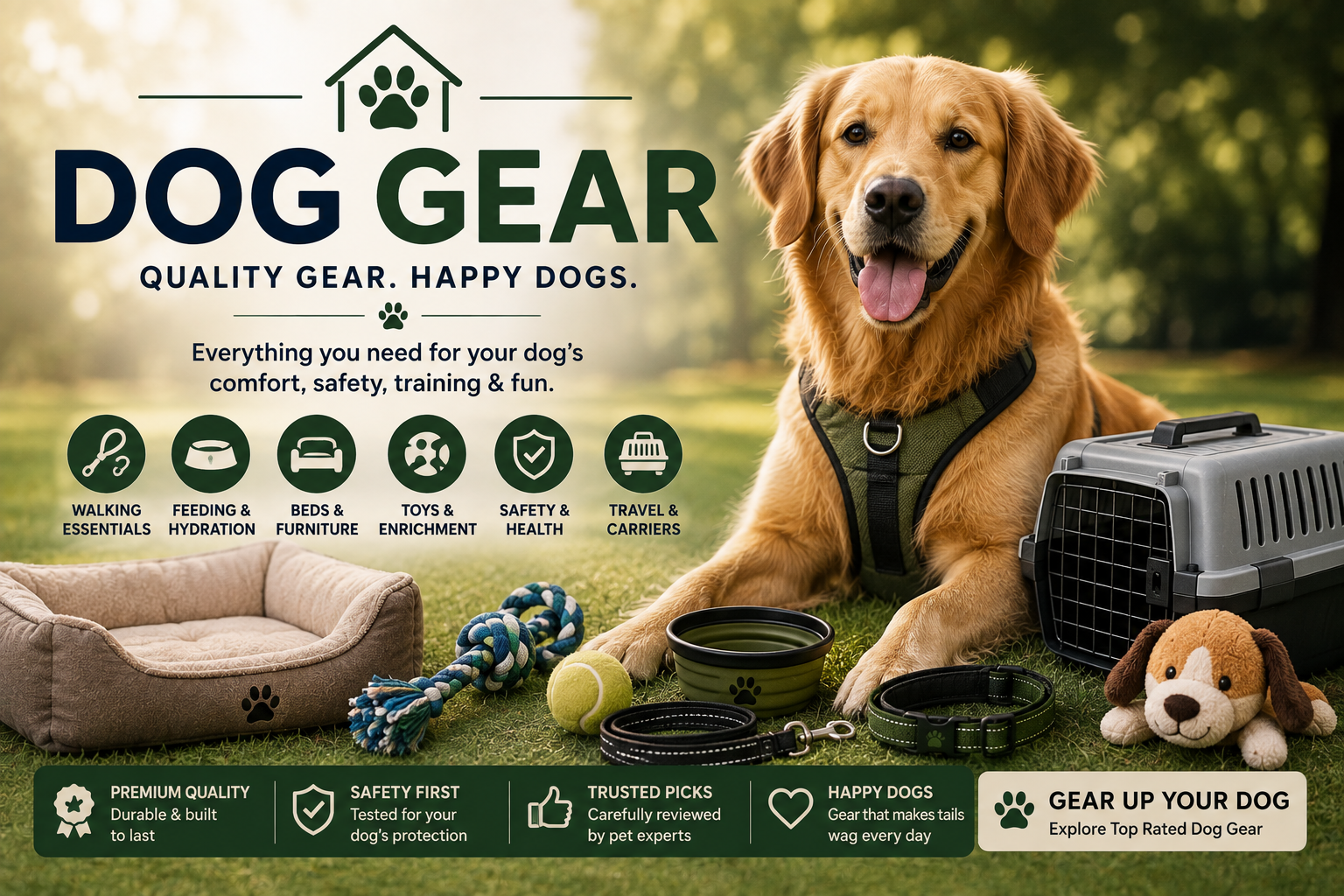
Dog Gear
Practical guidance for dog harnesses, beds, crates, travel equipment, toys, seasonal products and daily essentials.
Quick Answer
Choose dog gear by measured fit, activity level, handling needs and environment. Prioritize secure adjustment, durable construction, easy cleaning and a design that does not restrict normal movement or breathing.
Compare Current Dog Gear Options
Browse current options, then use the decision criteria below to narrow the selection by fit, safety, maintenance and real daily use.
Open the current category selection in a new tab.
View Available OptionsKey Dog Gear Decisions
Use these topic areas to move from a broad need to a more confident, specific choice.
Harnesses & Walking
Fit, adjustment, control and comfort for everyday walks.
Explore this guideBeds & Rest
Support, washable covers and appropriate sleeping surface.
Explore this guideCrates & Travel
Secure transport, ventilation and usable interior dimensions.
Explore this guideEnrichment
Chew, puzzle and interactive options matched to play style.
Explore this guideSenior Dog Gear
Ramps, supportive bedding and lower-effort access solutions.
Explore this guideSeasonal Gear
Cooling, visibility, weather protection and paw care.
Explore this guideWhat Matters Most
- Measure girth, neck and body length where relevant
- Match durability to chewing and activity level
- Avoid pressure across the throat or restricted shoulder movement
- Choose washable materials for frequently used gear
- Inspect clips, seams and chew damage regularly
A Practical Comparison Framework
| Criterion | What to check | Why it matters | Warning sign |
|---|---|---|---|
| Fit | Exact measurements and adjustment range | Reduces discomfort, escape and restricted movement | Only generic size labels are provided |
| Safety | Closures, stability, ventilation and materials | Helps control predictable ownership risks | Loose parts or unclear intended use |
| Maintenance | Cleaning access, consumables and replacement parts | Determines whether the product remains hygienic and usable | Critical areas cannot be cleaned |
| Daily use | Setup, storage, noise and handling | Affects whether owners use the product consistently | Complexity exceeds the benefit |
| Value | Durability and frequency of use | Provides a better measure than price alone | Decorative extras replace core function |
How to Choose More Confidently
1. Measure the decision
Measure girth, neck and body length where relevant
2. Match the decision
Match durability to chewing and activity level
3. Avoid the decision
Avoid pressure across the throat or restricted shoulder movement
4. Choose the decision
Choose washable materials for frequently used gear
5. Inspect the decision
Inspect clips, seams and chew damage regularly
Common Buying Mistakes
1. Buying by breed label instead of measurements.
2. Leaving chewable gear unsupervised.
3. Using poorly fitted restraints in vehicles.
4. Selecting overly warm gear for conditions.
5. Keeping equipment after hardware or stitching fails.
Dog Gear FAQs
What dog gear is essential?
A secure collar or harness with identification, a suitable leash, food and water equipment, a comfortable resting area and appropriate enrichment are common basics.
How should a dog harness fit?
It should be secure without restricting breathing or shoulder movement. Follow the maker’s measurement points and check for rubbing or gaps.
How do I choose durable dog toys?
Match the toy to chewing style and size, supervise use and remove it when pieces loosen or surfaces split.
What gear helps senior dogs?
Supportive bedding, ramps, traction surfaces and easier-access feeding or travel products may help, depending on mobility and veterinary advice.
Are vehicle tethers enough for travel?
Use products as directed and secure them to appropriate attachment points. A correctly positioned crate or tested restraint system may offer better containment.
How often should walking gear be replaced?
Replace it when webbing frays, hardware bends, stitching separates or adjustment no longer holds.
Does seasonal dog gear need special sizing?
Yes. Coats, boots and cooling gear should allow normal movement and not trap excessive heat.
Can dog gear solve behavior problems?
Gear can support management and training, but it does not replace a behavior plan or professional help when needed.
Choose Gear That Fits Real Daily Life
Confirm the fit, intended use, maintenance and safety requirements before deciding.
See Current Selection