
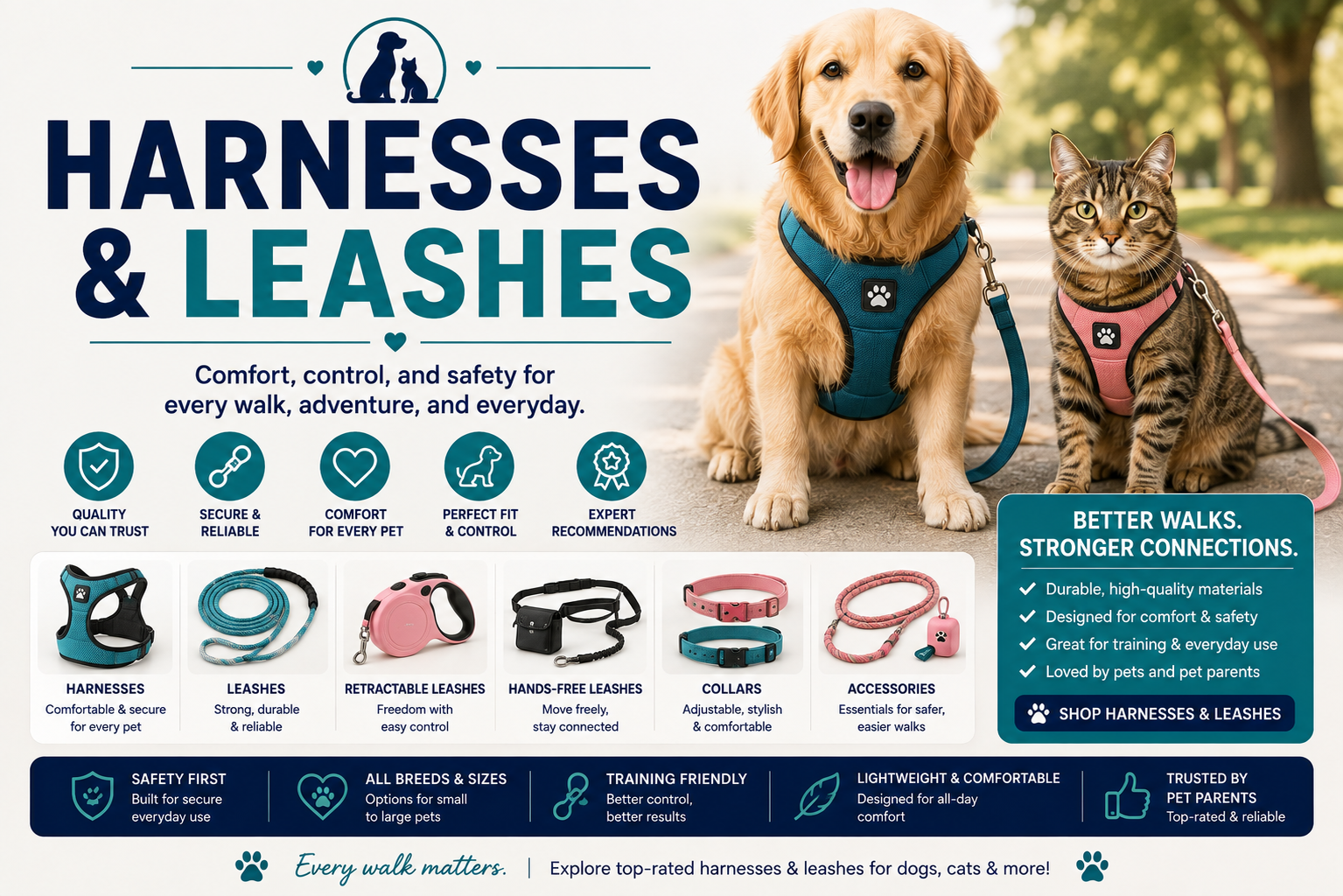
Dog Harnesses
Compare everyday, no-pull, escape-resistant, hiking, car and support harnesses by fit, attachment point and intended use.
Quick Answer
A secure harness should fit close to the body without restricting normal shoulder movement, rubbing behind the legs or allowing the dog to back out. Measure the chest and neck at the points specified by the manufacturer.
Dog Harnesses: current products worth comparing
These options match the specific buying intent of this page. Compare the product itself—not just the brand name—then verify sizing, compatibility and current specifications before ordering.
Ruffwear Front Range Harness
Padded everyday design with front and back leash attachment options.
CHECK CURRENT PRICESKurgo Tru-Fit Smart Harness
Walking harness with vehicle-restraint compatibility in the same system.
CHECK CURRENT PRICESPetSafe Easy Walk Harness
Front attachment design intended to reduce pulling leverage.
CHECK CURRENT PRICESBlue-9 Balance Harness
Multiple adjustment points help fine-tune fit across different dog builds.
CHECK CURRENT PRICESDog Harnesses comparison
| Product / family | Best for | Why compare it | What to verify | Action |
|---|---|---|---|---|
| Ruffwear Front Range Harness | Best all-around everyday harness | Padded everyday design with front and back leash attachment options. | Measure chest girth carefully and check shoulder/elbow clearance; a good model can still fit the wrong dog poorly. | CHECK PRICES |
| Kurgo Tru-Fit Smart Harness | Best for car-and-walk versatility | Walking harness with vehicle-restraint compatibility in the same system. | Measure chest girth carefully and check shoulder/elbow clearance; a good model can still fit the wrong dog poorly. | CHECK PRICES |
| PetSafe Easy Walk Harness | Best for front-clip control | Front attachment design intended to reduce pulling leverage. | Measure chest girth carefully and check shoulder/elbow clearance; a good model can still fit the wrong dog poorly. | CHECK PRICES |
| Blue-9 Balance Harness | Best for adjustability | Multiple adjustment points help fine-tune fit across different dog builds. | Measure chest girth carefully and check shoulder/elbow clearance; a good model can still fit the wrong dog poorly. | CHECK PRICES |
Which option fits which buyer?
Ruffwear Front Range Harness
Padded everyday design with front and back leash attachment options.
Before buying: Measure chest girth carefully and check shoulder/elbow clearance; a good model can still fit the wrong dog poorly.
Kurgo Tru-Fit Smart Harness
Walking harness with vehicle-restraint compatibility in the same system.
Before buying: Measure chest girth carefully and check shoulder/elbow clearance; a good model can still fit the wrong dog poorly.
PetSafe Easy Walk Harness
Front attachment design intended to reduce pulling leverage.
Before buying: Measure chest girth carefully and check shoulder/elbow clearance; a good model can still fit the wrong dog poorly.
Blue-9 Balance Harness
Multiple adjustment points help fine-tune fit across different dog builds.
Before buying: Measure chest girth carefully and check shoulder/elbow clearance; a good model can still fit the wrong dog poorly.
Compare Current Dog Harness Options
Browse current dog harnesses options, then use this guide to compare fit, materials, handling and maintenance.
Open the current selection in a new tab.
View Available OptionsFind the Right Type of Dog Harnesses
Start with how the dog harnesses will be used, then narrow the selection by fit and construction.
Everyday back-clip harness
Comfortable choice for many dogs that already walk calmly.
Explore this guideFront-clip and no-pull designs
Can provide additional directional control when paired with training.
Explore this guideEscape-resistant harnesses
Extra adjustment or strap coverage for dogs likely to reverse out.
Explore this guideLift and support harnesses
Handles or panels designed to assist dogs with limited mobility.
Explore this guideWhat Matters Most in Dog Harnesses
- Measure the dog using the manufacturer’s stated sizing points.
- Check adjustment range, hardware and contact areas before use.
- Introduce unfamiliar equipment gradually and reward calm behavior.
- Inspect for wear, rubbing, stretching or damaged fasteners.
- Choose handling features that match the dog, environment and owner.
Match Dog Harnesses to the Use Case
The most useful design depends on the dog and the situation.
| Use case | Useful design | Priority check | Common mistake |
|---|---|---|---|
| Daily walk | Padded back-clip harness | Shoulder clearance | Sizing only by body weight |
| Pulling dog | Front-clip or dual-clip harness | Training plan and strap position | Expecting hardware alone to stop pulling |
| Narrow-headed dog | Multi-strap escape-resistant design | Back-out resistance | Leaving excess strap loose |
| Hiking | Durable harness with secure handle | Heat, chafing and hardware | Using an untested fit on a long trail |
| Mobility support | Lift harness with broad support panels | Pressure distribution | Lifting from a single narrow strap |
How to Fit and Maintain Dog Harnesses
Follow a consistent setup and inspection routine.
1. Measure the chest
Measure around the widest part of the rib cage at the location specified by the brand.
2. Check the neck opening
Confirm it cannot slide over the head while avoiding pressure on the throat.
3. Adjust symmetrically
Keep straps flat and balanced rather than twisted or pulled to one side.
4. Test movement
Watch walking, sitting and shoulder extension for rubbing or restriction.
5. Recheck after activity
Coat compression and movement can change the fit during a walk.
6. Wash and inspect
Follow care instructions and replace stretched webbing, cracked buckles or damaged stitching.
A Harness Is a Handling Tool, Not a Complete Training Plan
Harnesses distribute leash forces differently from collars, but the exact effect depends on the design and fit. Straps should not cut into the armpits or sit so close to the shoulder that they limit normal movement.
Front attachment can help redirect some dogs, while a back attachment may be comfortable for dogs that do not pull. Dual-clip designs offer flexibility, but owners still need consistent leash skills and reinforcement.
For car use, do not assume an ordinary walking harness is crash protection. Use equipment specifically designed for vehicle restraint and follow its installation instructions.
Dog Harnesses FAQs
How tight should a dog harness be?
It should be snug enough that the dog cannot back out, while still allowing comfortable breathing and movement. A common fit check is that one or two fingers can be worked under the straps depending on the dog’s size and coat, but the manufacturer’s guidance should control.
Where should the chest strap sit?
The exact position varies by design, but straps should lie flat, avoid the throat and not rub directly behind the front legs. Watch the dog walk to confirm normal shoulder movement.
Is a front-clip harness better for pulling?
A front attachment may improve directional control, but it is not a substitute for training. Poor adjustment can twist the harness or change the dog’s gait.
Can a dog wear a harness all day?
Continuous wear can trap moisture, cause rubbing or allow straps to catch on objects. Remove it when appropriate and inspect the skin and coat regularly.
How do I prevent a dog from backing out of a harness?
Choose an escape-resistant design with multiple adjustment points, tighten it according to instructions and test the fit in a secure area. Dogs with narrow heads or deep chests may need an additional body strap.
Should identification be attached to the harness?
A harness can carry identification, but many owners also use a properly fitted collar with current ID. Avoid tags or attachments that interfere with buckles or movement.
Can a walking harness be used in the car?
Only when the manufacturer specifically designs and instructs it for vehicle restraint. A standard walking harness and leash are not automatically crash-tested safety equipment.
When should a harness be replaced?
Replace it when webbing stretches, stitching loosens, hardware cracks, padding deteriorates or the fit can no longer be secured reliably.
Choose a Harness That Stays Secure Without Restricting Movement
Measure carefully, confirm comfort during short sessions and choose the design that provides reliable control without unnecessary complexity.
See Current SelectionKEEP EXPLORING
Related guides and comparisons
Use these closely related PetSupplyGuide resources to compare options, understand fit and make the next buying decision with better context.