
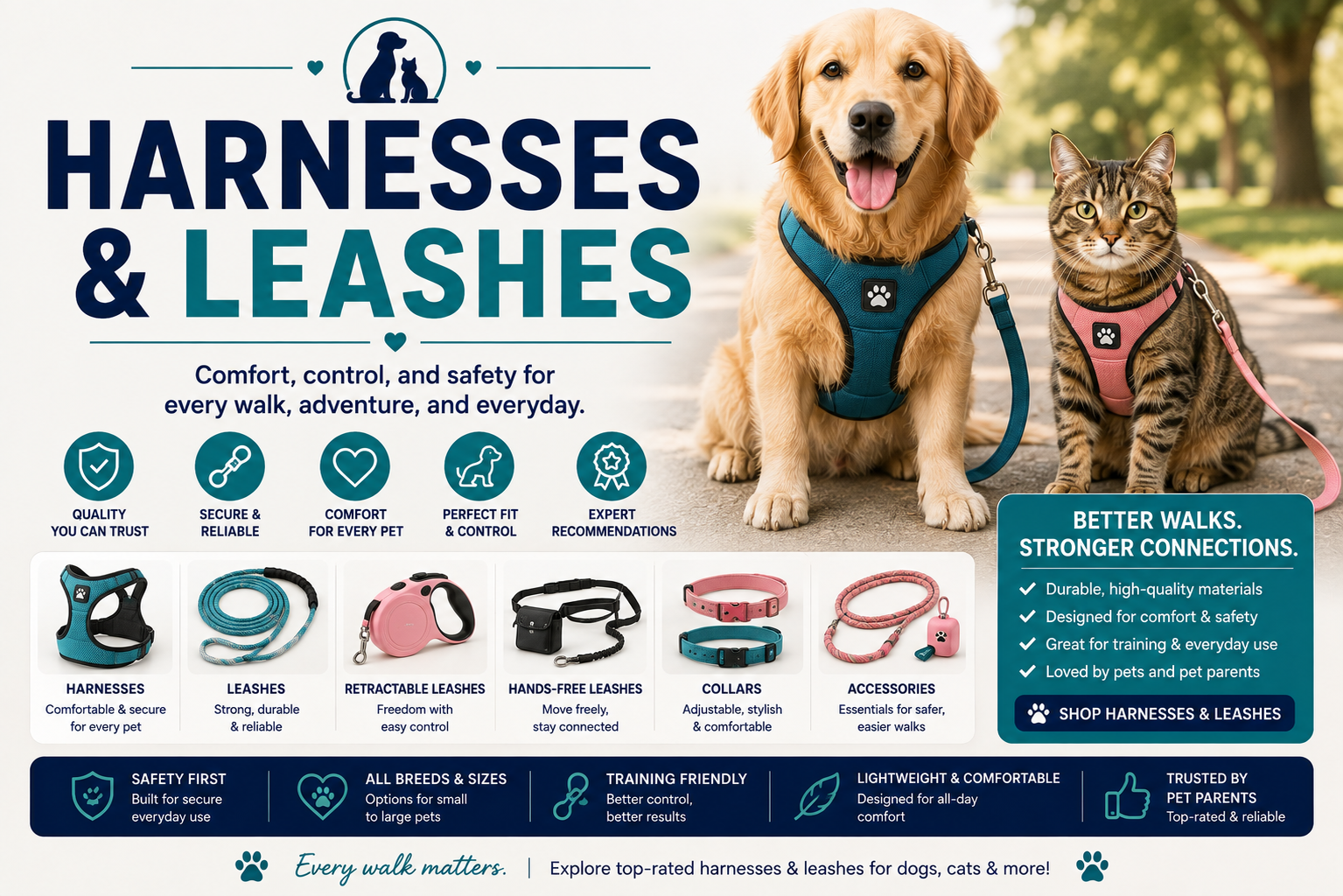
Best No-Pull Dog Harnesses
Compare best no-pull dog harnesses by comfort, safety, durability, ease of use and value to find the right option for your pet and lifestyle.
Quick Answer
A no-pull harness should redirect the dog without tightening painfully, restricting the shoulders, or replacing training. Front-clip and dual-clip designs are often the most practical starting points when they fit securely and remain centered during movement.
Best No-Pull Dog Harnesses: current products worth comparing
These options match the specific buying intent of this page. Compare the product itself—not just the brand name—then verify sizing, compatibility and current specifications before ordering.
Ruffwear Front Range Harness
Padded everyday design with front and back leash attachment options.
CHECK CURRENT PRICESKurgo Tru-Fit Smart Harness
Walking harness with vehicle-restraint compatibility in the same system.
CHECK CURRENT PRICESPetSafe Easy Walk Harness
Front attachment design intended to reduce pulling leverage.
CHECK CURRENT PRICESBlue-9 Balance Harness
Multiple adjustment points help fine-tune fit across different dog builds.
CHECK CURRENT PRICESBest No-Pull Dog Harnesses comparison
| Product / family | Best for | Why compare it | What to verify | Action |
|---|---|---|---|---|
| Ruffwear Front Range Harness | Best all-around everyday harness | Padded everyday design with front and back leash attachment options. | Measure chest girth carefully and check shoulder/elbow clearance; a good model can still fit the wrong dog poorly. | CHECK PRICES |
| Kurgo Tru-Fit Smart Harness | Best for car-and-walk versatility | Walking harness with vehicle-restraint compatibility in the same system. | Measure chest girth carefully and check shoulder/elbow clearance; a good model can still fit the wrong dog poorly. | CHECK PRICES |
| PetSafe Easy Walk Harness | Best for front-clip control | Front attachment design intended to reduce pulling leverage. | Measure chest girth carefully and check shoulder/elbow clearance; a good model can still fit the wrong dog poorly. | CHECK PRICES |
| Blue-9 Balance Harness | Best for adjustability | Multiple adjustment points help fine-tune fit across different dog builds. | Measure chest girth carefully and check shoulder/elbow clearance; a good model can still fit the wrong dog poorly. | CHECK PRICES |
Which option fits which buyer?
Ruffwear Front Range Harness
Padded everyday design with front and back leash attachment options.
Before buying: Measure chest girth carefully and check shoulder/elbow clearance; a good model can still fit the wrong dog poorly.
Kurgo Tru-Fit Smart Harness
Walking harness with vehicle-restraint compatibility in the same system.
Before buying: Measure chest girth carefully and check shoulder/elbow clearance; a good model can still fit the wrong dog poorly.
PetSafe Easy Walk Harness
Front attachment design intended to reduce pulling leverage.
Before buying: Measure chest girth carefully and check shoulder/elbow clearance; a good model can still fit the wrong dog poorly.
Blue-9 Balance Harness
Multiple adjustment points help fine-tune fit across different dog builds.
Before buying: Measure chest girth carefully and check shoulder/elbow clearance; a good model can still fit the wrong dog poorly.
Browse Best No-Pull Dog Harnesses
Review available formats, then compare fit, control, materials, maintenance, and the individual pet’s needs.
Open the approved category selection in a new tab.
View Available OptionsMain Types and Best Uses
Choose the format that fits the pet, environment, handler, and routine.
Front-clip harness
Redirects the chest when the dog reaches the end of the leash.
Centered ring and stable chest panelDual-clip harness
Supports front, back, or two-point leash handling.
Strong rings and even adjustmentLimited-tightening harness
Applies controlled tension within a designed range.
Safe stop point and no pinchingEscape-resistant no-pull harness
Combines redirection with added body security.
Rear strap and broad adjustmentWhat Matters Most
- Non-restrictive fit: The harness should not block shoulder extension or press the throat.
- Stable front ring: The chest panel should not twist sharply under leash tension.
- Adjustment range: Multiple points improve fit on deep, narrow, or broad chests.
- Handler control: The leash setup should be manageable without tangling.
- Training plan: Reward slack and reinforce the walking position you want.
Compare the Main Formats
Use this table to match the product format to the real use case.
| Format | Best use | Feature to prioritize | Important check |
|---|---|---|---|
| Front-clip harness | Redirects the chest when the dog reaches the end of the leash. | Centered ring and stable chest panel | Confirm fit, environment, and supervision needs. |
| Dual-clip harness | Supports front, back, or two-point leash handling. | Strong rings and even adjustment | Confirm fit, environment, and supervision needs. |
| Limited-tightening harness | Applies controlled tension within a designed range. | Safe stop point and no pinching | Confirm fit, environment, and supervision needs. |
| Escape-resistant no-pull harness | Combines redirection with added body security. | Rear strap and broad adjustment | Confirm fit, environment, and supervision needs. |
How to Choose and Use It Safely
Good setup and gradual introduction are as important as the product itself.
1. Fit without leash tension
Adjust the harness while the dog stands naturally.
2. Check chest alignment
Keep the front attachment centered over the sternum.
3. Start in a quiet area
Practice turning, stopping, and rewarding slack before busy walks.
4. Use gentle redirection
Avoid jerking or holding constant pressure on the front ring.
5. Watch the gait
Stop if straps restrict stride, twist, or rub the elbows.
6. Fade dependence
Build loose-leash skills so control does not rely only on equipment.
Common Buying and Use Mistakes
Selecting a tightening design that pinches or compresses the chest without a safe limit.
Using the front ring to drag the dog sideways rather than redirecting gently.
Expecting equipment to solve pulling while continuing to reward forward motion on a tight leash.
Related approved resources include Buying Guides, Best Dog Harnesses, Best Cat Harnesses.
Best No-Pull Dog Harnesses FAQs
Do no-pull harnesses really work?
They can improve leverage and make pulling easier to manage, especially with a front attachment. Lasting improvement still requires training.
Can a no-pull harness hurt a dog?
Poor fit, harsh handling, restrictive straps, or tightening designs can cause discomfort. Monitor gait, skin, and breathing.
Is front-clip better than back-clip for pulling?
A front clip can redirect the dog more effectively, while a back clip may provide more pulling leverage. Dual-clip models offer flexibility.
Should I use a double-ended leash?
A two-point leash can distribute guidance between front and back attachments, but the handler must manage it without tangling or constant tension.
Can puppies use no-pull harnesses?
Yes, when the harness is lightweight, non-restrictive, frequently refitted, and paired with gentle training. Growing puppies need regular size checks.
Why does the harness rotate sideways?
The fit may be loose, the chest panel may be too narrow, or leash tension may be excessive. Refit or choose a more stable design.
How should pulling be trained?
Reward slack leash, attention, and the desired position. Stop or change direction when tension develops rather than allowing pulling to reach the destination.
When should I stop using a no-pull harness?
Stop if it causes rubbing, restricted movement, fear, or persistent twisting. Change the fit or design and consult a qualified trainer or veterinarian when needed.
Choose Best No-Pull Dog Harnesses for the Real Routine
Match the product to the pet, setting, handling plan, and maintenance commitment before deciding.
See Current SelectionKEEP EXPLORING
Related guides and comparisons
Use these closely related PetSupplyGuide resources to compare options, understand fit and make the next buying decision with better context.