
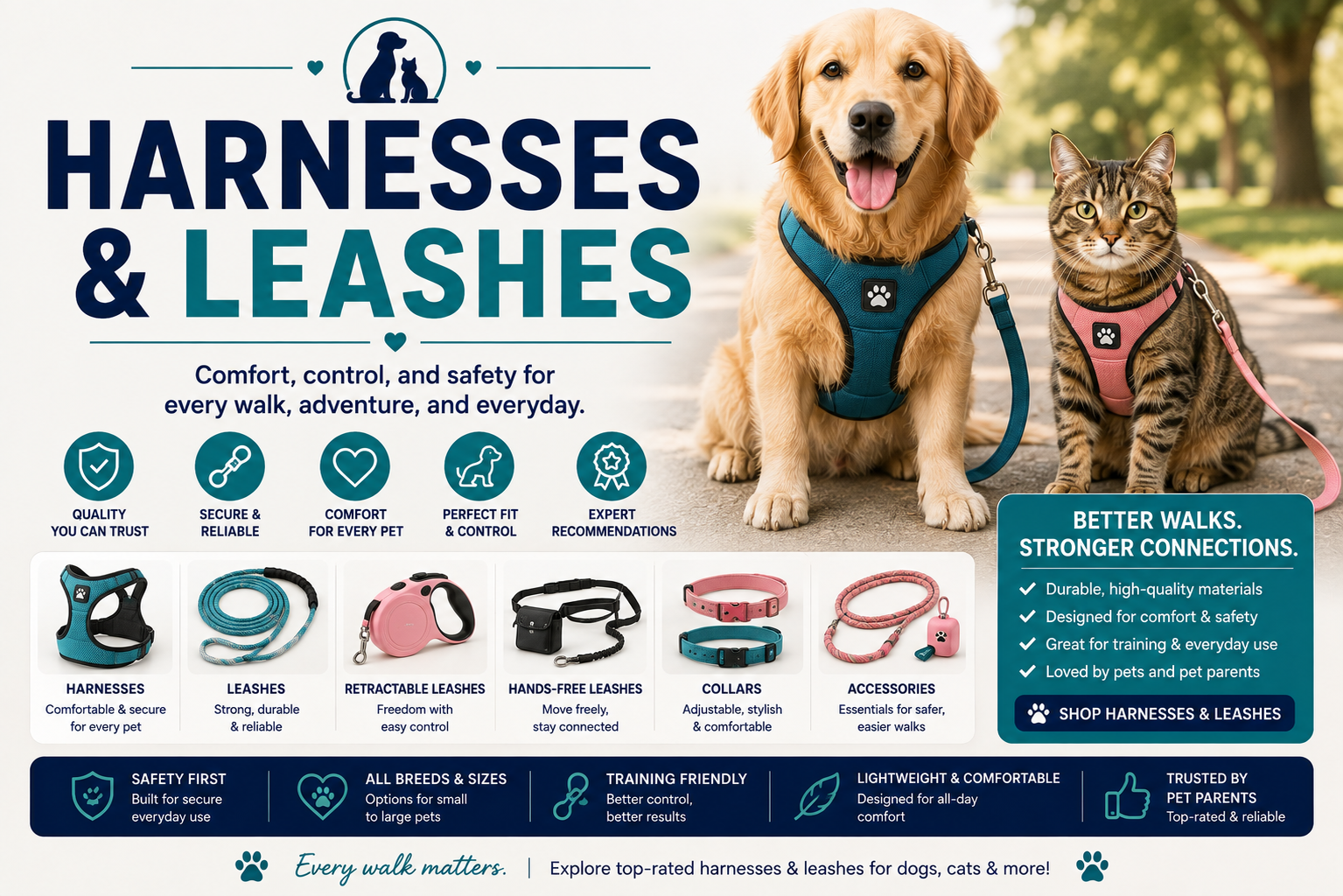
How to Choose a Dog Harness
Learn how to choose a dog harness with practical guidance on sizing, safety, setup, use and the key factors that matter when choosing pet gear.
Quick Answer
Choose a dog harness by the activity, chest girth, neck opening, adjustment range, shoulder freedom, escape risk, and leash attachment position. The best design stays centered, avoids the throat and elbows, and remains secure when the dog moves backward.
Products worth comparing while using this guide
These are current reference products for the exact buying decision on this page. Use the guide first, then compare fit, safety, maintenance, compatibility and current model details.
Ruffwear Front Range Harness
Padded everyday design with front and back leash attachment options.
CHECK CURRENT PRICESKurgo Tru-Fit Smart Harness
Walking harness with vehicle-restraint compatibility in the same system.
CHECK CURRENT PRICESPetSafe Easy Walk Harness
Front attachment design intended to reduce pulling leverage.
CHECK CURRENT PRICESBlue-9 Balance Harness
Multiple adjustment points help fine-tune fit across different dog builds.
CHECK CURRENT PRICESHow to Choose a Dog Harness comparison
| Product / family | Best for | Why compare it | What to verify | Action |
|---|---|---|---|---|
| Ruffwear Front Range Harness | Best all-around everyday harness | Padded everyday design with front and back leash attachment options. | Measure chest girth carefully and check shoulder/elbow clearance; a good model can still fit the wrong dog poorly. | CHECK PRICES |
| Kurgo Tru-Fit Smart Harness | Best for car-and-walk versatility | Walking harness with vehicle-restraint compatibility in the same system. | Measure chest girth carefully and check shoulder/elbow clearance; a good model can still fit the wrong dog poorly. | CHECK PRICES |
| PetSafe Easy Walk Harness | Best for front-clip control | Front attachment design intended to reduce pulling leverage. | Measure chest girth carefully and check shoulder/elbow clearance; a good model can still fit the wrong dog poorly. | CHECK PRICES |
| Blue-9 Balance Harness | Best for adjustability | Multiple adjustment points help fine-tune fit across different dog builds. | Measure chest girth carefully and check shoulder/elbow clearance; a good model can still fit the wrong dog poorly. | CHECK PRICES |
Which option fits which buyer?
Ruffwear Front Range Harness
Padded everyday design with front and back leash attachment options.
Before buying: Measure chest girth carefully and check shoulder/elbow clearance; a good model can still fit the wrong dog poorly.
Kurgo Tru-Fit Smart Harness
Walking harness with vehicle-restraint compatibility in the same system.
Before buying: Measure chest girth carefully and check shoulder/elbow clearance; a good model can still fit the wrong dog poorly.
PetSafe Easy Walk Harness
Front attachment design intended to reduce pulling leverage.
Before buying: Measure chest girth carefully and check shoulder/elbow clearance; a good model can still fit the wrong dog poorly.
Blue-9 Balance Harness
Multiple adjustment points help fine-tune fit across different dog builds.
Before buying: Measure chest girth carefully and check shoulder/elbow clearance; a good model can still fit the wrong dog poorly.
Browse How to Choose a Dog Harness
Use the guide below to compare fit, function, safety, maintenance, and the intended environment.
Open the approved product search.
View Available OptionsHow to Choose and Fit It
Back-clip harness
Calm everyday walking
Comfort and natural forward movementFront-clip harness
Pulling management and training
Stable chest positionDual-clip harness
Flexible training and everyday use
Balanced adjustmentSupport harness
Lifting, mobility, or hiking assistance
Handle strength and body supportWhat Matters Most
- Fit: Use exact measurements and current product charts.
- Function: Match the equipment to the real activity or problem.
- Safety: Inspect hardware, moving parts, electronics, or straps.
- Introduction: Test new equipment in a controlled setting.
- Maintenance: Clean, charge, sharpen, or adjust as required.
Side-by-Side Decision Table
| Area or type | Purpose | Priority | Final check |
|---|---|---|---|
| Back-clip harness | Calm everyday walking | Comfort and natural forward movement | Confirm fit on the individual dog. |
| Front-clip harness | Pulling management and training | Stable chest position | Confirm fit on the individual dog. |
| Dual-clip harness | Flexible training and everyday use | Balanced adjustment | Confirm fit on the individual dog. |
| Support harness | Lifting, mobility, or hiking assistance | Handle strength and body support | Confirm fit on the individual dog. |
How the Details Affect the Choice
1. Define the purpose
Decide whether the harness is for walking, pulling management, running, hiking, travel, or support.
2. Measure chest girth
Wrap a soft tape around the widest part of the rib cage behind the front legs.
3. Check neck and torso
Use the manufacturer’s required neck, back, and weight measurements.
4. Assess movement
Confirm straps do not cross the shoulder joint or rub behind the elbows.
5. Test escape resistance
Check the fit while the dog backs up, crouches, and turns.
6. Recheck regularly
Growth, weight change, coat length, and strap movement can alter fit.
Common Mistakes and Limitations
Choosing by breed or weight alone.
Leaving enough slack for the dog to reverse out.
Using a walking harness as a crash restraint without documented vehicle testing.
How to Choose a Dog Harness FAQs
What is the most important first step when learning how to choose a dog harness?
Choose a dog harness by the activity, chest girth, neck opening, adjustment range, shoulder freedom, escape risk, and leash attachment position. The best design stays centered, avoids the throat and elbows, and remains secure when the dog moves backward.
Should I rely on breed or weight labels?
No. Use current body measurements and the exact manufacturer chart because sizing is not standardized.
How can I tell if the fit is wrong?
Look for twisting, rubbing, restricted movement, slipping, coughing, pressure marks, or the ability to back out.
Should fit be checked after the first walk?
Yes. Recheck strap position, skin, coat, and hardware after movement reveals how the product settles.
How often should measurements be updated?
Recheck after growth, weight change, grooming, coat changes, or any visible shift in fit.
Can the same equipment be used for every activity?
Not necessarily. Walking, running, hiking, travel, restraint, and mobility support may require different designs.
What should be inspected before use?
Check stitching, clips, buckles, D-rings, webbing, elastic, edges, and adjustment hardware.
When should the product be replaced?
Replace it after fraying, cracking, bent hardware, failed buckles, stretched straps, or persistent fit problems.
Choose for the Real Pet and Routine
Prioritize fit, safety, compatibility, and practical daily use.
See Current SelectionKEEP EXPLORING
Related guides and comparisons
Use these closely related PetSupplyGuide resources to compare options, understand fit and make the next buying decision with better context.