
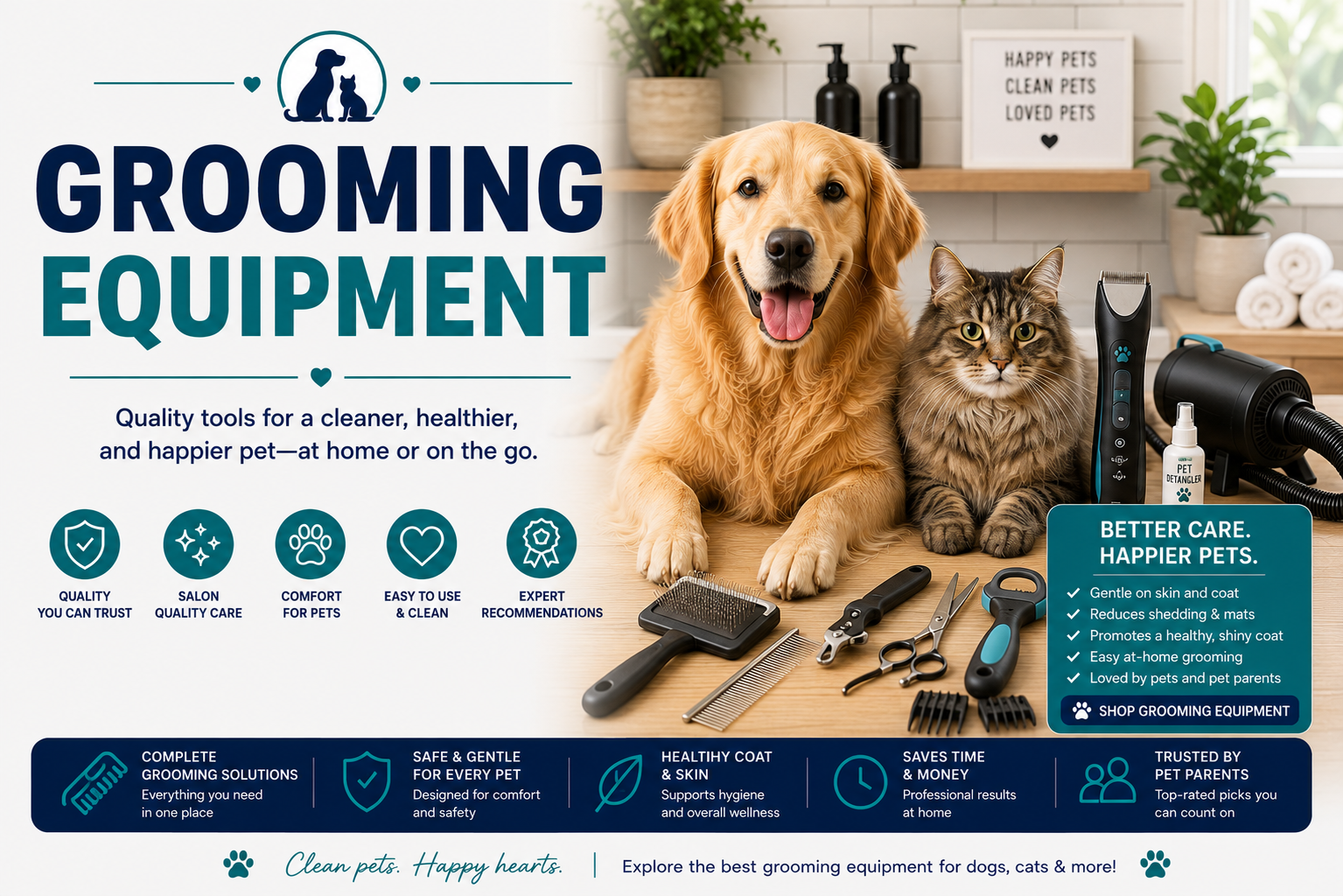
Pet Grooming Brushes
Explore pet grooming brushes with buying guides, product comparisons, sizing help, safety advice and practical recommendations for pet owners.
Quick Answer
Choose a brush for the pet’s coat type and the job being done: removing loose hair, smoothing the topcoat, working through tangles, or checking the skin. Gentle technique and frequent short sessions are safer than forceful brushing after mats have formed.
Browse Pet Grooming Brushes
Review the current selection, then use the fit, safety, handling, maintenance, and compatibility guidance below to narrow the choices.
Open the approved category search in a new tab.
View Available OptionsMain Types and Use Cases
Start with the product format that fits the pet, handler, environment, and task rather than choosing by appearance alone.
Slicker brush
Lifts loose hair and works through light tangles in many medium or long coats.
Flexible pins and appropriate sizePin brush
Useful for longer coats and gentle everyday maintenance.
Rounded pins and cushioned baseBristle brush
Smooths short coats and distributes surface oils.
Bristle density suited to coatUndercoat rake
Removes loose undercoat in double-coated pets.
Tooth length that reaches undercoat without scraping skinWhat Matters Most
- Coat match: Pin length, tooth spacing, and stiffness should suit coat density and length.
- Skin comfort: Rounded tips and controlled pressure reduce scratching and irritation.
- Mat prevention: Brush high-friction areas before tangles become tight or painful.
- Handling: A secure non-slip grip helps maintain light, even pressure.
- Cleaning: Remove trapped hair and wash or disinfect according to the tool material.
Compare the Main Formats
Use this framework to identify the configuration that best matches the intended routine.
| Format | Best use | Feature to prioritize | Important check |
|---|---|---|---|
| Slicker brush | Lifts loose hair and works through light tangles in many medium or long coats. | Flexible pins and appropriate size | Match the product to the individual pet and intended setting. |
| Pin brush | Useful for longer coats and gentle everyday maintenance. | Rounded pins and cushioned base | Match the product to the individual pet and intended setting. |
| Bristle brush | Smooths short coats and distributes surface oils. | Bristle density suited to coat | Match the product to the individual pet and intended setting. |
| Undercoat rake | Removes loose undercoat in double-coated pets. | Tooth length that reaches undercoat without scraping skin | Match the product to the individual pet and intended setting. |
How to Choose and Use It Safely
A careful setup and gradual introduction usually matter as much as the product itself.
1. Inspect the coat
Separate hair with your fingers and check for mats, sores, parasites, or sensitive areas.
2. Brush in small sections
Support the coat near the skin and work from ends toward the body when tangles are present.
3. Use light pressure
The tool should move through hair without repeatedly scraping the same patch of skin.
4. Reward calm behavior
Pair short handling periods with treats or other valued reinforcement.
5. Check high-friction areas
Pay attention behind ears, under legs, around collars, and near the tail.
6. Clean the brush
Remove hair after use and follow material-specific cleaning instructions.
Common Buying and Use Mistakes
Using one brush style for every coat and every grooming task.
Pulling through tight mats, which can be painful and may injure the skin.
Continuing after redness, flinching, or broken skin appears.
Related approved resources include Pet Grooming Tables & Dryers Best Dog Brushes Best Cat Brushes.
Pet Grooming Brushes FAQs
Which brush is best for a short-haired pet?
A rubber grooming tool or suitable bristle brush often works well for loose hair and surface cleaning. Coat texture and skin sensitivity still matter.
What brush works for a double coat?
An undercoat rake or de-shedding tool can reach loose undercoat, followed by a slicker or pin brush. Avoid excessive pressure or repeated passes over one area.
Can mats be brushed out at home?
Small loose tangles may be worked apart carefully. Tight, skin-level, or extensive mats are safer for a professional groomer or veterinary team to assess.
How often should a pet be brushed?
Frequency depends on coat type, shedding, health, and lifestyle. Long or dense coats generally need more frequent maintenance than smooth short coats.
Why does my pet dislike brushing?
The brush may pull, scrape, or be associated with long sessions. Use a better-matched tool, shorter sessions, lighter pressure, and rewards.
Should brushes be shared between pets?
Sharing can transfer hair, dirt, parasites, or skin organisms. Clean and disinfect compatible tools thoroughly, especially when a pet has a skin problem.
How should a grooming brush be cleaned?
Remove trapped hair first, then wash or disinfect only as allowed for the handle, cushion, pins, or bristles. Dry completely before storage.
When should a brush be replaced?
Replace it when pins bend or lose tips, bristles become sharp, cushions split, or the tool can no longer be cleaned effectively.
Choose Pet Grooming Brushes for the Real Routine
Match the product to the pet, setting, handling plan, and maintenance commitment before deciding.
See Current Selection