
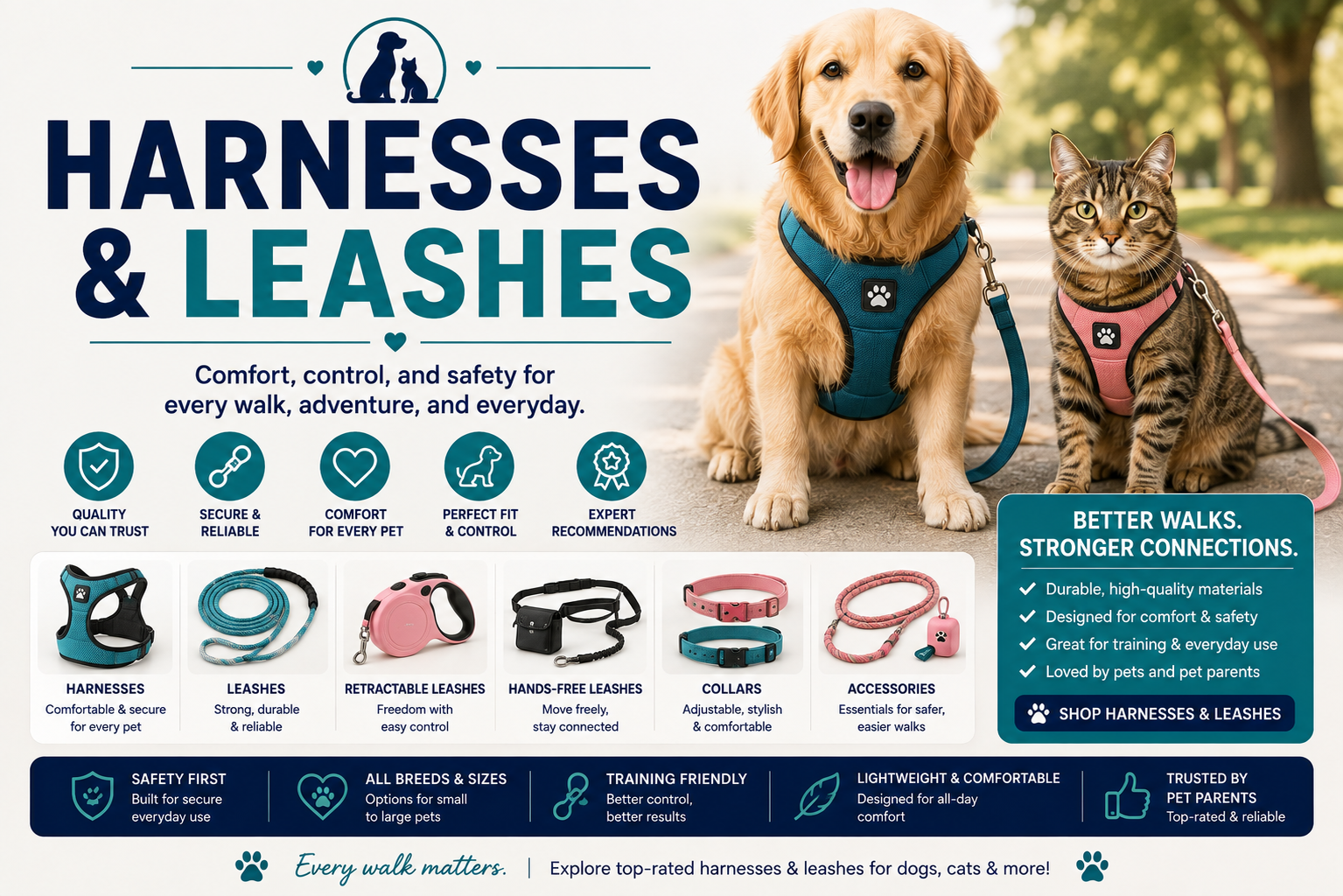
Dog Leashes
Compare standard, long-line, hands-free, double-ended and retractable leashes by control, material, hardware and environment.
Quick Answer
A standard fixed-length leash is the most predictable starting point for everyday walking. Choose a width, clip and handle that suit the dog’s strength and the owner’s grip, then use specialized lengths only where they can be managed safely.
Dog Leashes: current products worth comparing
These options match the specific buying intent of this page. Compare the product itself—not just the brand name—then verify sizing, compatibility and current specifications before ordering.
Ruffwear Roamer Leash
Elasticized leash suited to walking, hiking and running.
CHECK CURRENT PRICESMax and Neo Double Handle Traffic Leash
Second traffic handle adds control near roads and crowds.
CHECK CURRENT PRICESKurgo Quantum 6-in-1 Leash
Convertible design supports several carrying and tethering configurations.
CHECK CURRENT PRICESFlexi New Comfort Retractable Leash
Established retractable line with controlled-length walking range.
CHECK CURRENT PRICESDog Leashes comparison
| Product / family | Best for | Why compare it | What to verify | Action |
|---|---|---|---|---|
| Ruffwear Roamer Leash | Best hands-free/stretch option | Elasticized leash suited to walking, hiking and running. | Match leash length and hardware to dog size, environment and training goal; retractable lines add distance and entanglement risk. | CHECK PRICES |
| Max and Neo Double Handle Traffic Leash | Best for close control | Second traffic handle adds control near roads and crowds. | Match leash length and hardware to dog size, environment and training goal; retractable lines add distance and entanglement risk. | CHECK PRICES |
| Kurgo Quantum 6-in-1 Leash | Best multipurpose leash | Convertible design supports several carrying and tethering configurations. | Match leash length and hardware to dog size, environment and training goal; retractable lines add distance and entanglement risk. | CHECK PRICES |
| Flexi New Comfort Retractable Leash | Best retractable option | Established retractable line with controlled-length walking range. | Match leash length and hardware to dog size, environment and training goal; retractable lines add distance and entanglement risk. | CHECK PRICES |
Which option fits which buyer?
Ruffwear Roamer Leash
Elasticized leash suited to walking, hiking and running.
Before buying: Match leash length and hardware to dog size, environment and training goal; retractable lines add distance and entanglement risk.
Max and Neo Double Handle Traffic Leash
Second traffic handle adds control near roads and crowds.
Before buying: Match leash length and hardware to dog size, environment and training goal; retractable lines add distance and entanglement risk.
Kurgo Quantum 6-in-1 Leash
Convertible design supports several carrying and tethering configurations.
Before buying: Match leash length and hardware to dog size, environment and training goal; retractable lines add distance and entanglement risk.
Flexi New Comfort Retractable Leash
Established retractable line with controlled-length walking range.
Before buying: Match leash length and hardware to dog size, environment and training goal; retractable lines add distance and entanglement risk.
Compare Current Dog Leash Options
Browse current dog leashes options, then use this guide to compare fit, materials, handling and maintenance.
Open the current selection in a new tab.
View Available OptionsFind the Right Type of Dog Leashes
Start with how the dog leashes will be used, then narrow the selection by fit and construction.
Standard fixed-length leashes
Predictable control for sidewalks, training and everyday use.
Explore this guideLong lines
Useful for recall practice in open areas under active supervision.
Explore this guideRetractable leashes
Provide variable range but require careful handling and suitable environments.
Explore this guideHands-free and double-ended designs
Can support running or multi-point attachment when used correctly.
Explore this guideWhat Matters Most in Dog Leashes
- Measure the dog using the manufacturer’s stated sizing points.
- Check adjustment range, hardware and contact areas before use.
- Introduce unfamiliar equipment gradually and reward calm behavior.
- Inspect for wear, rubbing, stretching or damaged fasteners.
- Choose handling features that match the dog, environment and owner.
Match Dog Leashes to the Use Case
The most useful design depends on the dog and the situation.
| Use case | Useful design | Priority check | Common mistake |
|---|---|---|---|
| Neighborhood walk | 4–6 foot fixed leash | Comfortable handle and strong clip | Wrapping the leash around the hand |
| Recall practice | Long line | Open space and glove-friendly handling | Allowing slack to tangle around legs |
| Busy area | Short fixed leash | Close, calm control | Using excessive length near traffic |
| Running | Hands-free leash with shock control | Waist fit and dog training | Starting before leash manners are reliable |
| Open park | Retractable leash where permitted | Lock operation and surroundings | Using it near roads, crowds or dogs |
How to Fit and Maintain Dog Leashes
Follow a consistent setup and inspection routine.
1. Match strength to the dog
Consider body weight, pulling force and chewing behavior rather than appearance alone.
2. Inspect the clip
Check that the gate closes fully and the swivel is not cracked or jammed.
3. Manage slack
Keep enough freedom for natural walking without loops that can tangle.
4. Protect hands
Use the handle as designed and avoid grabbing thin line or wrapping it around fingers.
5. Practice specialized systems
Learn long-line, hands-free or double-ended handling in a quiet area first.
6. Clean and dry
Rinse dirt or salt, inspect stitching and let the leash dry before storage.
Leash Length Changes the Handling Problem
Longer is not automatically better. More length increases freedom but also increases the distance required to respond, the chance of tangling and the force generated when the dog reaches the end.
Retractable leashes can be useful in limited settings, but the thin line and variable range demand attention. Fixed leashes are usually easier to manage around traffic, crowds and close encounters.
A leash is only as reliable as its weakest part. Inspect the handle, stitching, webbing, rope, clip and attachment point on the collar or harness.
Dog Leashes FAQs
What leash length is best for everyday walks?
A fixed leash around four to six feet is a common starting point because it balances movement with predictable control. Local rules and the walking environment may require a shorter option.
Are retractable leashes safe?
They can be difficult to manage around roads, crowds, other dogs and obstacles. The user must understand the lock, avoid grabbing the line and maintain awareness of the dog’s range.
What is a long line used for?
Long lines are often used for recall practice and controlled exploration in open spaces. They require active supervision and careful slack management to prevent tangling or rope burns.
Should the leash attach to a collar or harness?
That depends on the dog and equipment. Harness attachment may reduce direct neck pressure, while a collar may be suitable for calm walkers and identification.
What leash material is easiest to maintain?
Coated webbing and some synthetic materials wipe clean easily, while rope, leather and fabric have different care needs. Choose material based on grip, weather and maintenance preferences.
How do I stop a dog from chewing the leash?
Management and training are more important than simply buying thicker material. Redirect chewing, reward calm walking and inspect any leash that has been mouthed for hidden damage.
Can a hands-free leash be used for running?
It can be useful after the dog has reliable leash manners and the handler understands the waist system. Introduce distance and pace gradually and consider heat and surface conditions.
When should a leash be replaced?
Replace it when the clip malfunctions, stitching loosens, webbing frays, rope cores are exposed or chewing has weakened the material.
Choose Predictable Control for the Environment
Measure carefully, confirm comfort during short sessions and choose the design that provides reliable control without unnecessary complexity.
See Current SelectionKEEP EXPLORING
Related guides and comparisons
Use these closely related PetSupplyGuide resources to compare options, understand fit and make the next buying decision with better context.