
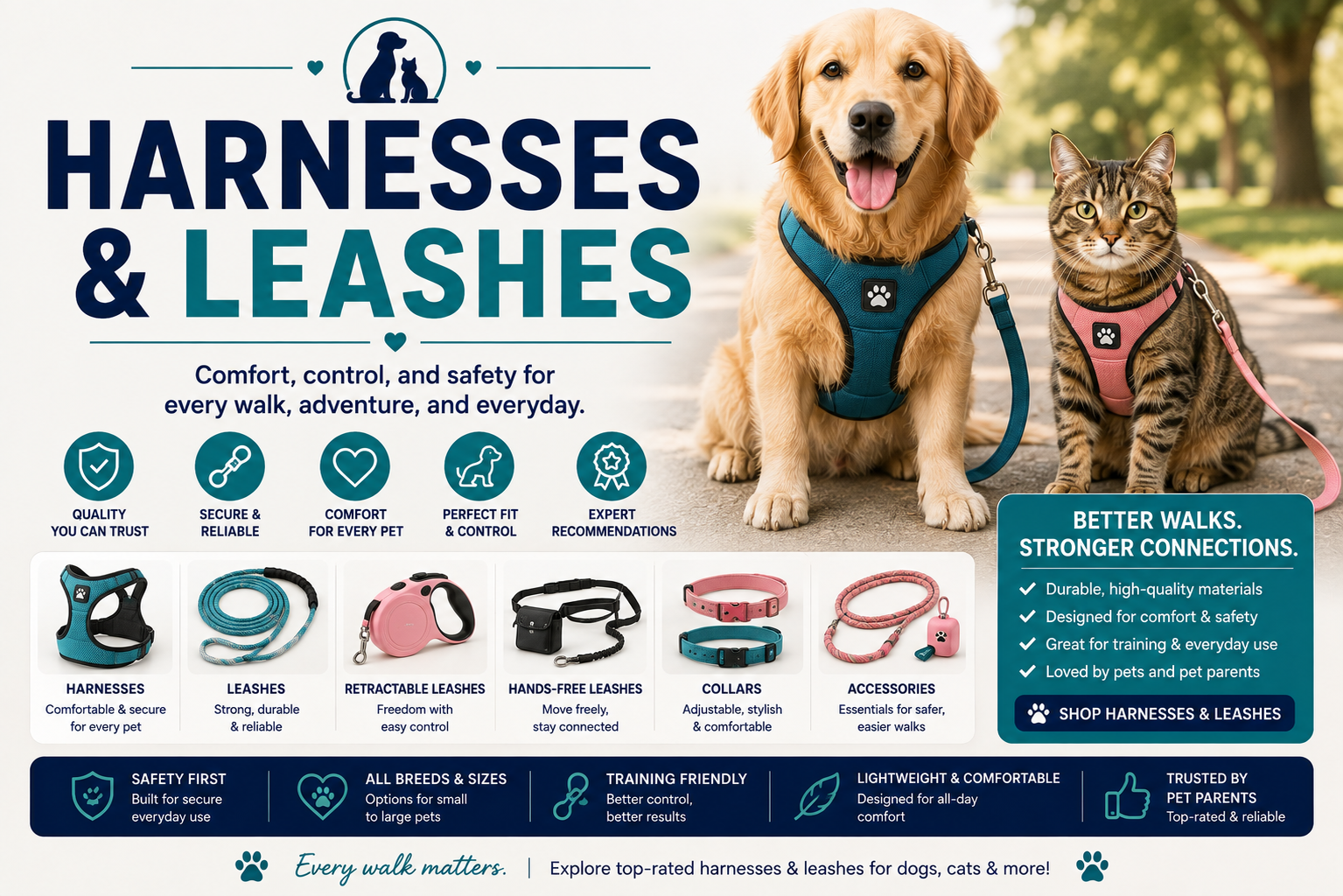
Dog Training Leashes & Clickers
Explore dog training leashes & clickers with buying guides, product comparisons, sizing help, safety advice and practical recommendations for pet owners.
Quick Answer
A practical training setup usually starts with a comfortable fixed-length leash, a clearly audible marker such as a clicker, and rewards delivered immediately after the desired behavior. The equipment should support clear communication without relying on pain, fear, or startling corrections.
Browse Dog Training Leashes & Clickers
Review the current selection, then use the fit, safety, handling, maintenance, and compatibility guidance below to narrow the choices.
Open the approved category search in a new tab.
View Available OptionsMain Types and Use Cases
Start with the product format that fits the pet, handler, environment, and task rather than choosing by appearance alone.
Standard training leash
Useful for foundation skills, loose-leash walking, and everyday practice.
Comfortable handle and dependable snapLong line
Adds controlled distance for recall and outdoor practice.
Low-tangle material and suitable lengthClicker
Creates a precise marker for the instant the correct behavior occurs.
Consistent sound and easy one-hand useTreat pouch
Keeps small rewards accessible so reinforcement is not delayed.
Secure closure and washable liningWhat Matters Most
- Leash handling: Choose a length that lets you maintain control without constant tension.
- Marker clarity: Use one consistent click or verbal marker and pair it with a reward.
- Grip and hardware: Check stitching, snap operation, handle comfort, and weight for the dog.
- Training timing: Mark the exact behavior you want, then reward promptly.
- Environment: Begin in a quiet area before adding distance, duration, or distractions.
Compare the Main Formats
Use this framework to identify the configuration that best matches the intended routine.
| Format | Best use | Feature to prioritize | Important check |
|---|---|---|---|
| Standard training leash | Useful for foundation skills, loose-leash walking, and everyday practice. | Comfortable handle and dependable snap | Match the product to the individual pet and intended setting. |
| Long line | Adds controlled distance for recall and outdoor practice. | Low-tangle material and suitable length | Match the product to the individual pet and intended setting. |
| Clicker | Creates a precise marker for the instant the correct behavior occurs. | Consistent sound and easy one-hand use | Match the product to the individual pet and intended setting. |
| Treat pouch | Keeps small rewards accessible so reinforcement is not delayed. | Secure closure and washable lining | Match the product to the individual pet and intended setting. |
How to Choose and Use It Safely
A careful setup and gradual introduction usually matter as much as the product itself.
1. Condition the marker
Click once and immediately give a small reward until the dog anticipates reinforcement.
2. Practice leash mechanics
Keep the leash relaxed, shorten it only when needed, and avoid wrapping it around your hand.
3. Reward position
Reinforce the dog near the position you want repeated rather than pulling the dog into place.
4. Add distractions gradually
Increase difficulty one variable at a time and return to an easier setting after repeated misses.
5. End while successful
Use short sessions and finish after a correct response instead of waiting for frustration.
6. Inspect the equipment
Replace frayed webbing, damaged handles, weak snaps, or clickers that no longer sound reliably.
Common Buying and Use Mistakes
Using a retractable leash for precision exercises can make consistent leash pressure and distance difficult.
Clicking after the dog has moved away from the desired behavior marks the wrong moment.
Repeating cues while pulling on the leash can create confusion rather than a clear learning sequence.
Related approved resources include Best Dog Training Clickers Best Dog Training Collars Dog Leashes.
Dog Training Leashes & Clickers FAQs
Is a clicker better than a verbal marker?
Both can work. A clicker is very consistent and precise, while a verbal marker is always available. Choose one the handler can deliver reliably and follow it with reinforcement.
What leash length is useful for basic training?
A fixed leash around four to six feet works for many foundation exercises. Longer lines are better for controlled distance work and should be used in open areas away from traffic.
Should the leash stay tight during training?
No. A consistently tight leash can become background pressure and makes it harder to reward slack. Aim for a soft curve whenever safety allows.
Can one clicker be used with multiple dogs?
Yes, but train one dog at a time at first so each animal understands which response earned the marker and reward.
How quickly must a reward follow the click?
The click identifies the exact behavior, but reinforcement should still follow promptly. Keep rewards accessible so the sequence remains clear.
Are long lines safe near roads?
No. Long lines are best used in controlled open spaces. Near traffic, use a shorter leash and secure handling appropriate to the environment.
What rewards work besides food?
Toys, play, access to sniffing, movement, and attention can reinforce behavior when the dog values them. Food is often convenient for rapid repetition.
When should damaged training gear be replaced?
Replace leashes with frayed webbing, damaged stitching, weakened hardware, or handles that no longer provide a secure grip.
Choose Dog Training Leashes & Clickers for the Real Routine
Match the product to the pet, setting, handling plan, and maintenance commitment before deciding.
See Current Selection