
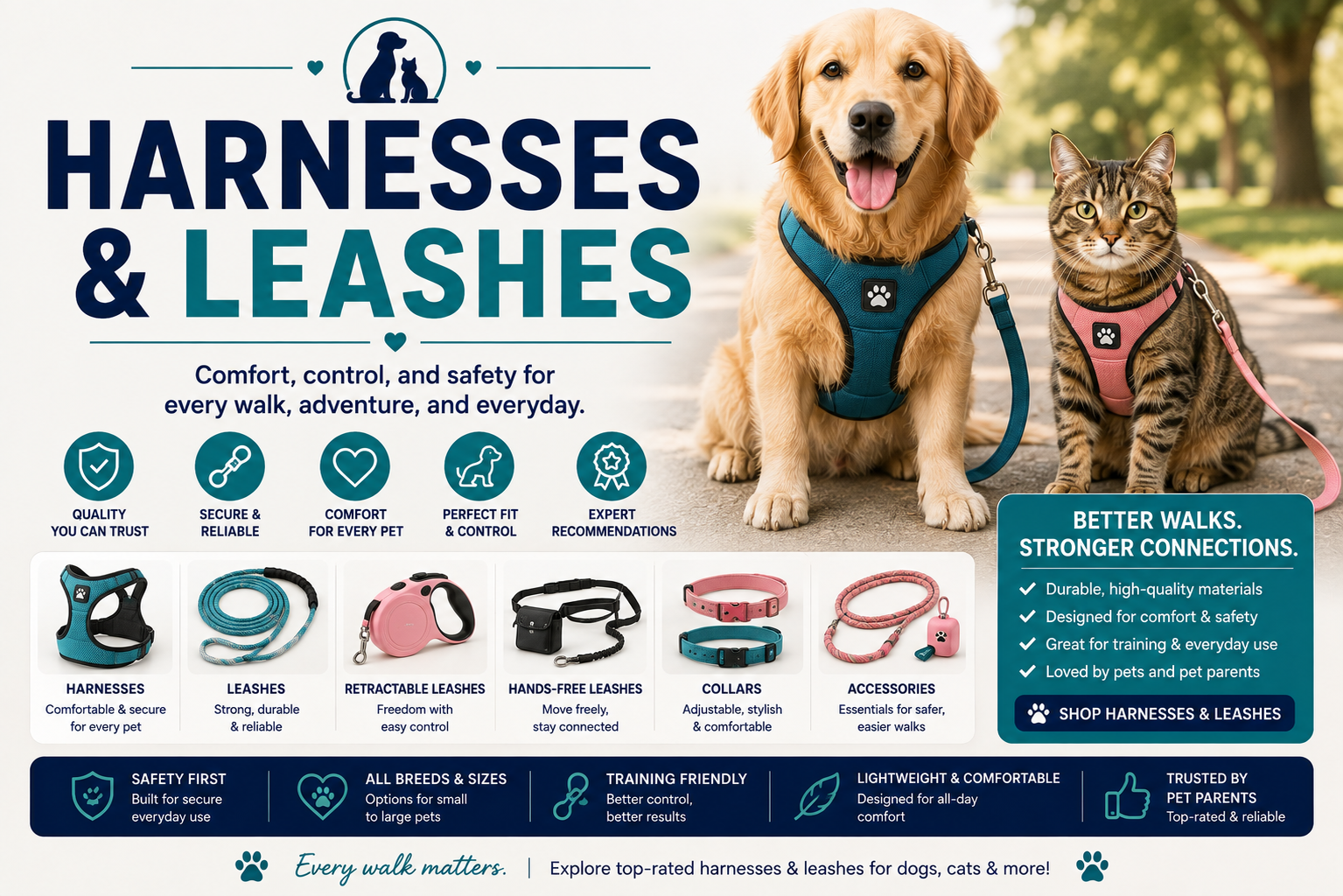
Best Dog Collars
Compare best dog collars by comfort, safety, durability, ease of use and value to find the right option for your pet and lifestyle.
Quick Answer
The best everyday collar fits securely, carries identification, and matches the dog’s neck shape and behavior without causing pressure or skin irritation. Flat collars suit many dogs, while martingale designs can improve security for dogs whose heads are narrower than their necks.
Browse Best Dog Collars
Review available formats, then compare fit, control, materials, maintenance, and the individual pet’s needs.
Open the approved category selection in a new tab.
View Available OptionsMain Types and Best Uses
Choose the format that fits the pet, environment, handler, and routine.
Flat buckle collar
Everyday identification and leash attachment for many dogs.
Width, buckle strength, adjustmentMartingale collar
Adds limited tightening for narrow-headed or escape-prone dogs.
Correct stop adjustment and supervisionQuick-release collar
Allows fast removal in appropriate everyday settings.
Reliable buckle and protected releaseWaterproof coated collar
Resists odor and moisture for active or swimming dogs.
Flexible coating and corrosion-resistant hardwareWhat Matters Most
- Fit: Allow comfortable breathing while preventing the collar from sliding over the head.
- Width: Match collar width and hardware weight to the dog’s neck and size.
- Identification: Use readable tags and keep registration details current.
- Skin and coat: Check for redness, matting, hair loss, moisture, and trapped debris.
- Activity risk: Remove collars when snagging is likely or when enclosure rules recommend it.
Compare the Main Formats
Use this table to match the product format to the real use case.
| Format | Best use | Feature to prioritize | Important check |
|---|---|---|---|
| Flat buckle collar | Everyday identification and leash attachment for many dogs. | Width, buckle strength, adjustment | Confirm fit, environment, and supervision needs. |
| Martingale collar | Adds limited tightening for narrow-headed or escape-prone dogs. | Correct stop adjustment and supervision | Confirm fit, environment, and supervision needs. |
| Quick-release collar | Allows fast removal in appropriate everyday settings. | Reliable buckle and protected release | Confirm fit, environment, and supervision needs. |
| Waterproof coated collar | Resists odor and moisture for active or swimming dogs. | Flexible coating and corrosion-resistant hardware | Confirm fit, environment, and supervision needs. |
How to Choose and Use It Safely
Good setup and gradual introduction are as important as the product itself.
1. Measure the neck
Place the tape where the collar sits and follow the brand chart.
2. Select appropriate width
Avoid heavy hardware on tiny dogs or narrow pressure points on large dogs.
3. Adjust the fit
Confirm the collar stays secure through head and neck movement.
4. Attach identification
Use a legible tag and inspect the ring or tag attachment.
5. Test during routine activity
Watch for coughing, slipping, scratching, or rotation.
6. Clean and inspect
Wash according to material and replace damaged hardware or webbing.
Common Buying and Use Mistakes
Leaving a puppy’s collar unadjusted during rapid growth.
Using a collar for heavy pulling when a properly fitted harness would reduce throat pressure.
Allowing wet collars to remain against the skin for long periods.
Related approved resources include Dog Harnesses, Buying Guides, Best Dog Training Collars.
Best Dog Collars FAQs
How tight should a dog collar be?
It should be secure without compressing the neck. Follow the manufacturer’s guidance and confirm the collar cannot pass over the dog’s head.
Is a buckle or snap collar better?
Both can work when well made. Buckles offer simple mechanical security, while quick-release snaps are convenient but should be inspected for wear.
What is a martingale collar for?
It provides limited tightening to reduce backing out, especially in narrow-headed dogs. It must be adjusted so it cannot choke when fully tightened.
Should identification stay on the dog at home?
Visible identification can help after an unexpected escape. Balance that benefit against snag risks in crates, play, or unsupervised environments.
Can collars cause hair loss?
Yes. Poor fit, moisture, dirt, rough edges, or constant friction can damage skin and coat. Remove and inspect regularly.
How wide should the collar be?
Width should distribute pressure without overwhelming the neck. Larger, stronger dogs often benefit from wider collars, while small dogs need lighter hardware.
Can a collar be used for car restraint?
A neck collar should not be the primary crash restraint. Use a vehicle restraint designed and tested for that purpose.
When should a collar be replaced?
Replace it when webbing stretches, leather cracks, coating peels sharply, buckles loosen, rings deform, or stitching frays.
Choose Best Dog Collars for the Real Routine
Match the product to the pet, setting, handling plan, and maintenance commitment before deciding.
See Current Selection