
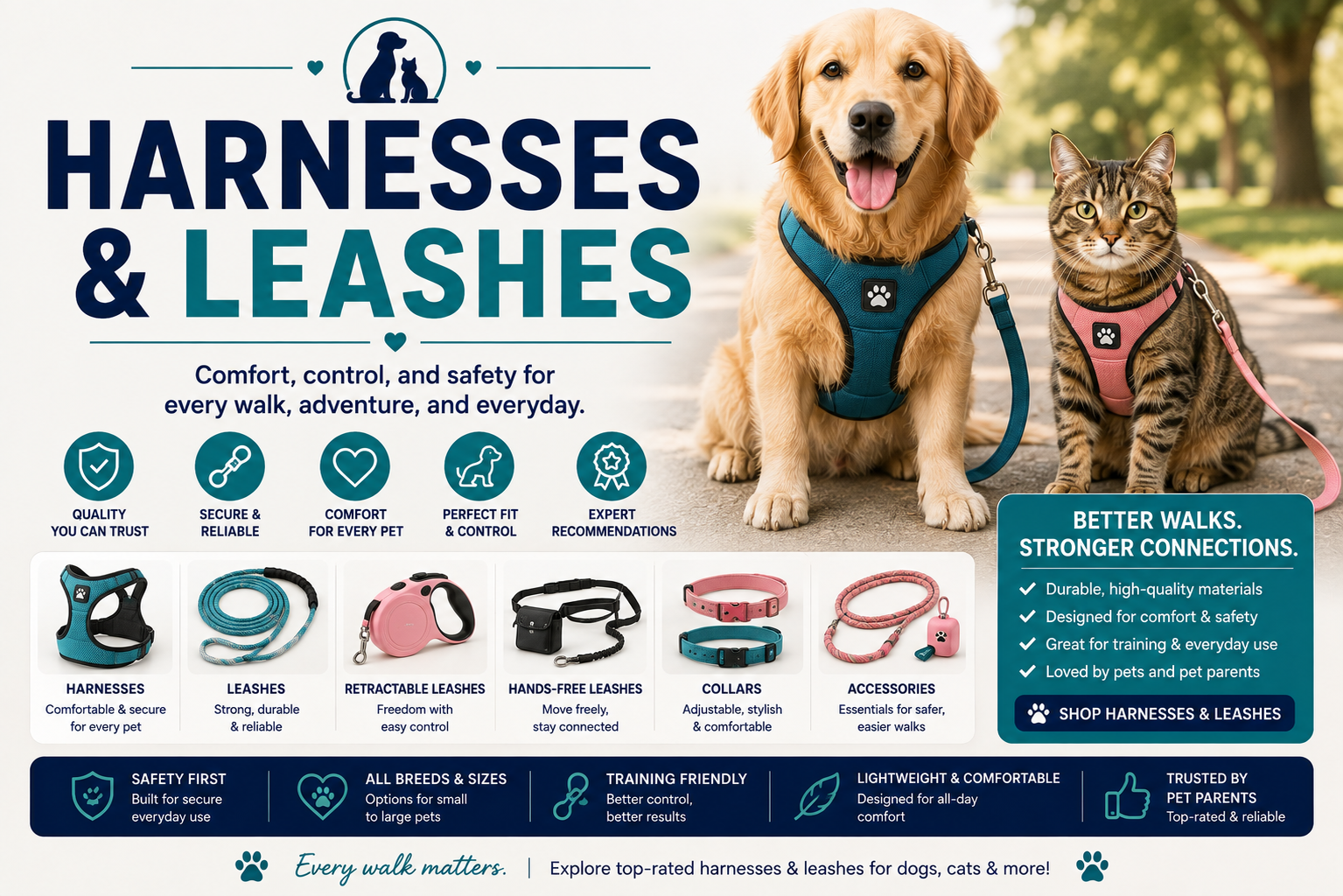
Best Dog Leashes
Compare best dog leashes by comfort, safety, durability, ease of use and value to find the right option for your pet and lifestyle.
Quick Answer
For most everyday walks, a fixed-length leash with a comfortable handle, dependable snap, and width matched to the dog provides the clearest control. Specialized leashes can help with running, training, or two-dog handling, but each adds specific safety and handling requirements.
Browse Best Dog Leashes
Review available formats, then compare fit, control, materials, maintenance, and the individual pet’s needs.
Open the approved category selection in a new tab.
View Available OptionsMain Types and Best Uses
Choose the format that fits the pet, environment, handler, and routine.
Standard fixed leash
Everyday neighborhood walking and foundation training.
Four-to-six-foot control, comfortable handleLong line
Recall and distance training in open controlled areas.
Visible material, low tangle, secure snapHands-free leash
Running or walking when waist attachment is appropriate.
Quick release and shock controlTraffic or short leash
Close control in crowds, clinics, and crossings.
Strong handle and appropriate lengthWhat Matters Most
- Length: Choose enough freedom for the setting without losing control.
- Material: Balance grip, weight, water resistance, and chewing risk.
- Hardware: Match snap size and strength to the dog.
- Handle comfort: Avoid thin edges that cut the hand under tension.
- Visibility: Reflective or bright materials help in low light.
Compare the Main Formats
Use this table to match the product format to the real use case.
| Format | Best use | Feature to prioritize | Important check |
|---|---|---|---|
| Standard fixed leash | Everyday neighborhood walking and foundation training. | Four-to-six-foot control, comfortable handle | Confirm fit, environment, and supervision needs. |
| Long line | Recall and distance training in open controlled areas. | Visible material, low tangle, secure snap | Confirm fit, environment, and supervision needs. |
| Hands-free leash | Running or walking when waist attachment is appropriate. | Quick release and shock control | Confirm fit, environment, and supervision needs. |
| Traffic or short leash | Close control in crowds, clinics, and crossings. | Strong handle and appropriate length | Confirm fit, environment, and supervision needs. |
How to Choose and Use It Safely
Good setup and gradual introduction are as important as the product itself.
1. Match leash to setting
Use shorter control near traffic and longer lines only in open safe spaces.
2. Inspect the snap
Confirm smooth closure, no bending, and no trapped grit.
3. Hold without wrapping
Use a secure grip while keeping loops away from fingers and wrists.
4. Practice slack walking
Reward the dog before the leash becomes tight.
5. Manage crossings early
Shorten the leash before roads, doors, dogs, and crowds.
6. Clean and dry
Remove mud, salt, and moisture and inspect stitching after use.
Common Buying and Use Mistakes
Using a long line near roads, bikes, crowded paths, or obstacles where it can wrap.
Wrapping the leash around the wrist or fingers when handling a strong dog.
Choosing a very heavy clip that repeatedly strikes a small dog’s legs or chest.
Related approved resources include Dog Harnesses, Buying Guides, Best Retractable Dog Leashes.
Best Dog Leashes FAQs
What leash length is best for daily walks?
A fixed leash around four to six feet works for many dogs and environments. Shorter options improve close control, while longer lines are for open training areas.
Is nylon or leather better?
Nylon is light and easy to clean, while leather can soften into a comfortable grip. Quality, width, stitching, and maintenance matter more than material alone.
When should a long line be used?
Use it for recall and distance work in open, controlled spaces away from roads and entanglement hazards.
Are hands-free leashes safe?
They can be useful with a trained dog and a secure quick-release system. Sudden pulling can affect balance, so they are not ideal for every handler or dog.
How strong should the clip be?
It should match the dog’s size and pulling force without being unnecessarily heavy. Inspect the gate and swivel often.
Can a leash be attached to a collar?
Yes for many calm dogs, but a harness may reduce neck pressure for pullers or dogs with airway or neck concerns.
How do I stop leash chewing?
Interrupt and redirect, provide appropriate chew outlets, and avoid leaving the leash attached unsupervised. Replace damaged leashes promptly.
When should a leash be replaced?
Replace after fraying, cuts, stretched stitching, stiff corrosion, damaged handles, or unreliable snap closure.
Choose Best Dog Leashes for the Real Routine
Match the product to the pet, setting, handling plan, and maintenance commitment before deciding.
See Current Selection